Aquaculture Monitoring Analyst Resume

As an Aquaculture Monitoring Analyst, you will play a crucial role in ensuring the sustainability and efficiency of aquaculture operations. Your primary responsibilities will include collecting, analyzing, and interpreting data related to water quality, fish health, and environmental conditions. You will work closely with aquaculture managers to identify trends and recommend improvements based on your findings. In addition to data analysis, you will be involved in developing monitoring protocols and methodologies to enhance aquaculture practices. Your expertise will contribute to the formulation of strategies aimed at optimizing production while minimizing environmental impact. You will also be responsible for preparing detailed reports and presentations to communicate your insights to stakeholders, ensuring that decision-makers are well-informed and equipped to implement best practices.

0.0 (0 ratings)

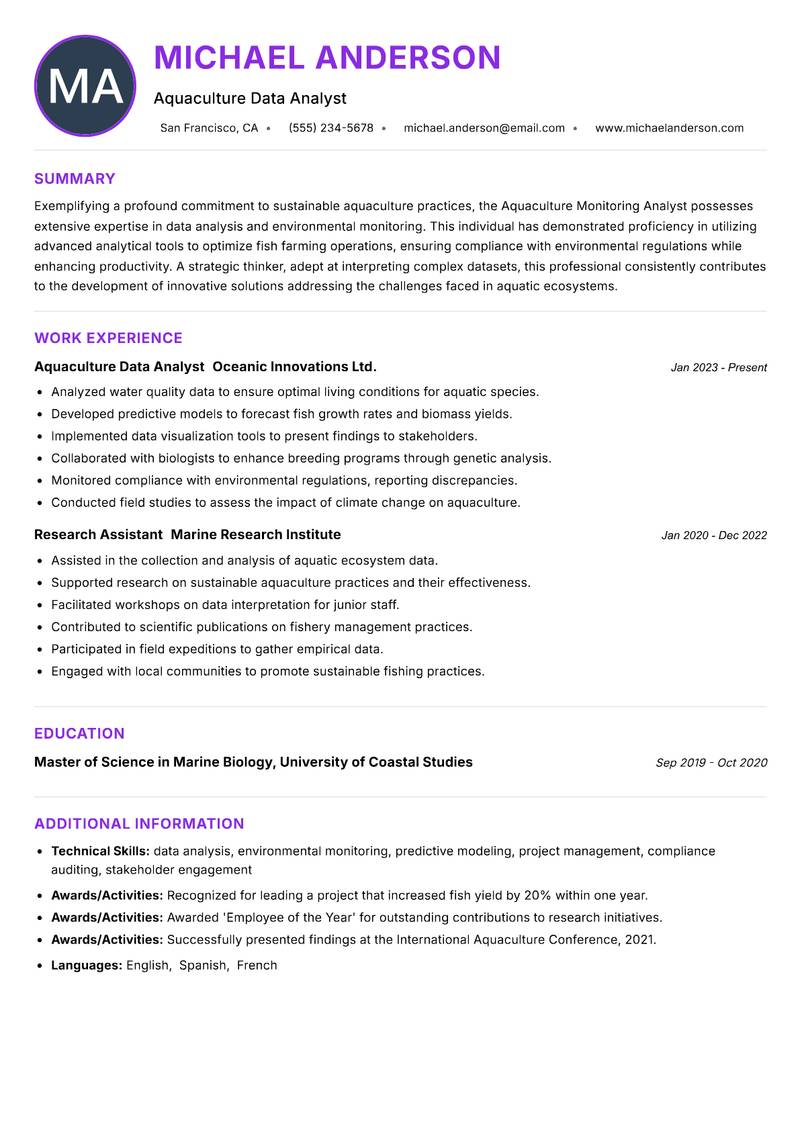
Aquaculture Data Analyst Resume

Exemplifying a profound commitment to sustainable aquaculture practices, the Aquaculture Monitoring Analyst possesses extensive expertise in data analysis and environmental monitoring. This individual has demonstrated proficiency in utilizing advanced analytical tools to optimize fish farming operations, ensuring compliance with environmental regulations while enhancing productivity. A strategic thinker, adept at interpreting complex datasets, this professional consistently contributes to the development of innovative solutions addressing the challenges faced in aquatic ecosystems. The ability to collaborate with multidisciplinary teams and communicate findings effectively has resulted in significant advancements in aquaculture methodologies. Furthermore, a robust understanding of marine biology and ecosystem dynamics underpins the analytical approach, driving improvements in fish health management and resource allocation. Proven track record in managing large-scale projects, this analyst embodies a proactive approach to problem-solving, fostering a culture of continuous improvement within organizations.

data analysis environmental monitoring predictive modeling project management compliance auditing stakeholder engagement
  1. Analyzed water quality data to ensure optimal living conditions for aquatic species.
  2. Developed predictive models to forecast fish growth rates and biomass yields.
  3. Implemented data visualization tools to present findings to stakeholders.
  4. Collaborated with biologists to enhance breeding programs through genetic analysis.
  5. Monitored compliance with environmental regulations, reporting discrepancies.
  6. Conducted field studies to assess the impact of climate change on aquaculture.
  1. Assisted in the collection and analysis of aquatic ecosystem data.
  2. Supported research on sustainable aquaculture practices and their effectiveness.
  3. Facilitated workshops on data interpretation for junior staff.
  4. Contributed to scientific publications on fishery management practices.
  5. Participated in field expeditions to gather empirical data.
  6. Engaged with local communities to promote sustainable fishing practices.

Achievements

  • Recognized for leading a project that increased fish yield by 20% within one year.
  • Awarded 'Employee of the Year' for outstanding contributions to research initiatives.
  • Successfully presented findings at the International Aquaculture Conference, 2021.
⏱️
Experience
2-5 Years
📅
Level
Mid Level
🎓
Education
Master of Science in Marine Bi...

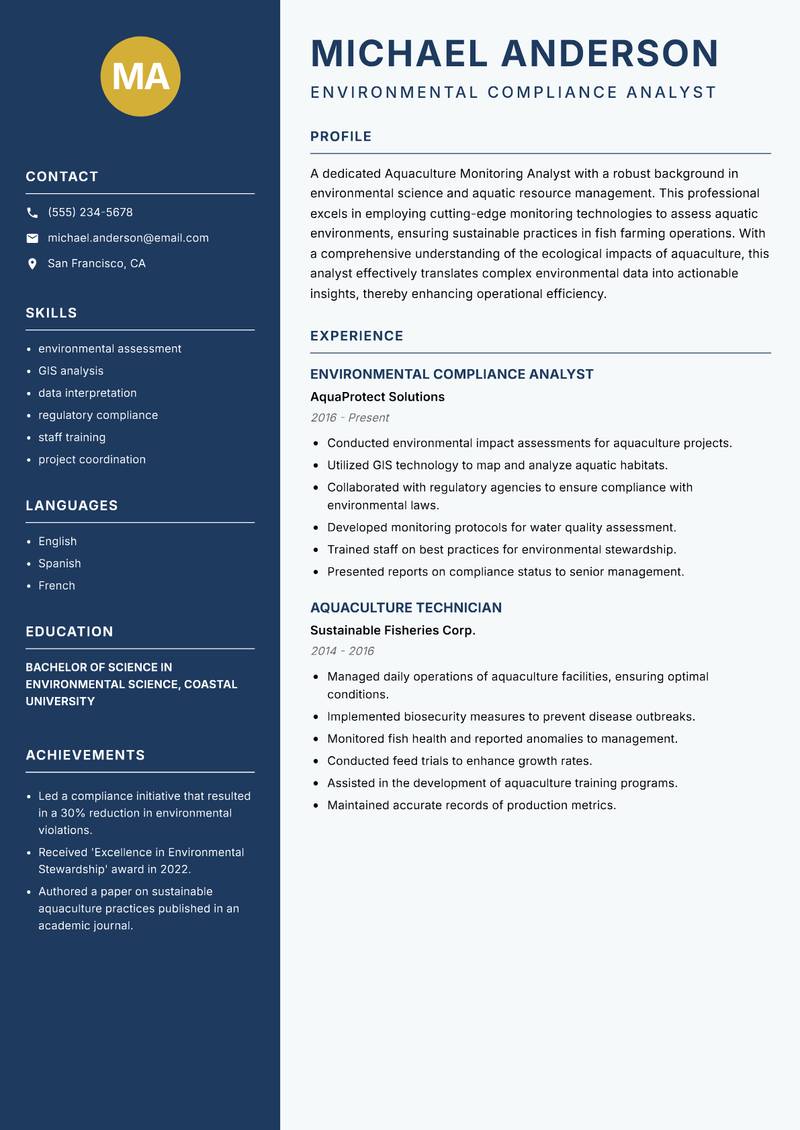
Environmental Compliance Analyst Resume

A dedicated Aquaculture Monitoring Analyst with a robust background in environmental science and aquatic resource management. This professional excels in employing cutting-edge monitoring technologies to assess aquatic environments, ensuring sustainable practices in fish farming operations. With a comprehensive understanding of the ecological impacts of aquaculture, this analyst effectively translates complex environmental data into actionable insights, thereby enhancing operational efficiency. The ability to engage with regulatory bodies and industry stakeholders ensures adherence to best practices and compliance with environmental standards. A detail-oriented individual, proficient in utilizing GIS and remote sensing technologies to monitor and manage aquatic resources, fostering the development of sustainable aquaculture strategies. This professional's commitment to continuous learning and adaptation to emerging technologies positions them as a pivotal asset in the field of aquaculture.

environmental assessment GIS analysis data interpretation regulatory compliance staff training project coordination
  1. Conducted environmental impact assessments for aquaculture projects.
  2. Utilized GIS technology to map and analyze aquatic habitats.
  3. Collaborated with regulatory agencies to ensure compliance with environmental laws.
  4. Developed monitoring protocols for water quality assessment.
  5. Trained staff on best practices for environmental stewardship.
  6. Presented reports on compliance status to senior management.
  1. Managed daily operations of aquaculture facilities, ensuring optimal conditions.
  2. Implemented biosecurity measures to prevent disease outbreaks.
  3. Monitored fish health and reported anomalies to management.
  4. Conducted feed trials to enhance growth rates.
  5. Assisted in the development of aquaculture training programs.
  6. Maintained accurate records of production metrics.

Achievements

  • Led a compliance initiative that resulted in a 30% reduction in environmental violations.
  • Received 'Excellence in Environmental Stewardship' award in 2022.
  • Authored a paper on sustainable aquaculture practices published in an academic journal.
⏱️
Experience
2-5 Years
📅
Level
Mid Level
🎓
Education
Bachelor of Science in Environ...

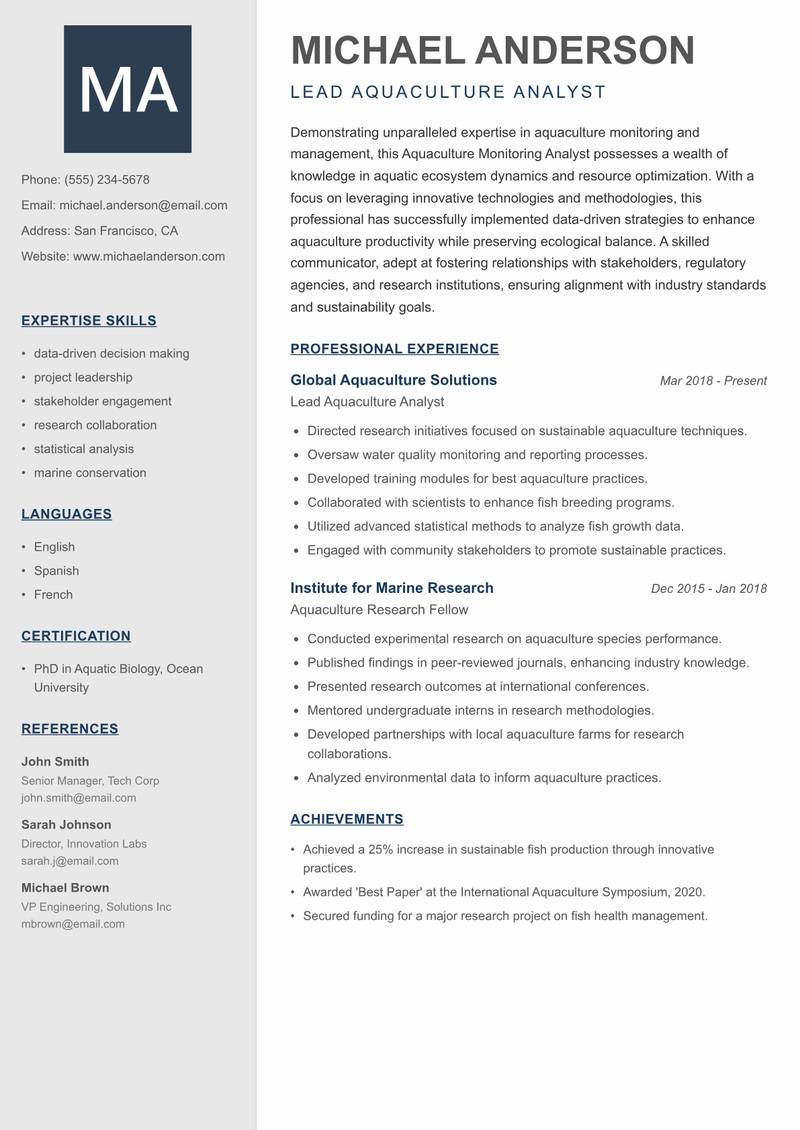
Lead Aquaculture Analyst Resume

Demonstrating unparalleled expertise in aquaculture monitoring and management, this Aquaculture Monitoring Analyst possesses a wealth of knowledge in aquatic ecosystem dynamics and resource optimization. With a focus on leveraging innovative technologies and methodologies, this professional has successfully implemented data-driven strategies to enhance aquaculture productivity while preserving ecological balance. A skilled communicator, adept at fostering relationships with stakeholders, regulatory agencies, and research institutions, ensuring alignment with industry standards and sustainability goals. The ability to synthesize complex information into clear, actionable reports underscores a commitment to informed decision-making. This analyst's proactive approach and strategic mindset have been instrumental in advancing organizational objectives, driving improvements in fish health management, and optimizing resource allocation. A proven track record in project leadership and a passion for marine conservation position this individual as a key contributor to the future of sustainable aquaculture.

data-driven decision making project leadership stakeholder engagement research collaboration statistical analysis marine conservation
  1. Directed research initiatives focused on sustainable aquaculture techniques.
  2. Oversaw water quality monitoring and reporting processes.
  3. Developed training modules for best aquaculture practices.
  4. Collaborated with scientists to enhance fish breeding programs.
  5. Utilized advanced statistical methods to analyze fish growth data.
  6. Engaged with community stakeholders to promote sustainable practices.
  1. Conducted experimental research on aquaculture species performance.
  2. Published findings in peer-reviewed journals, enhancing industry knowledge.
  3. Presented research outcomes at international conferences.
  4. Mentored undergraduate interns in research methodologies.
  5. Developed partnerships with local aquaculture farms for research collaborations.
  6. Analyzed environmental data to inform aquaculture practices.

Achievements

  • Achieved a 25% increase in sustainable fish production through innovative practices.
  • Awarded 'Best Paper' at the International Aquaculture Symposium, 2020.
  • Secured funding for a major research project on fish health management.
⏱️
Experience
2-5 Years
📅
Level
Mid Level
🎓
Education
PhD in Aquatic Biology, Ocean ...

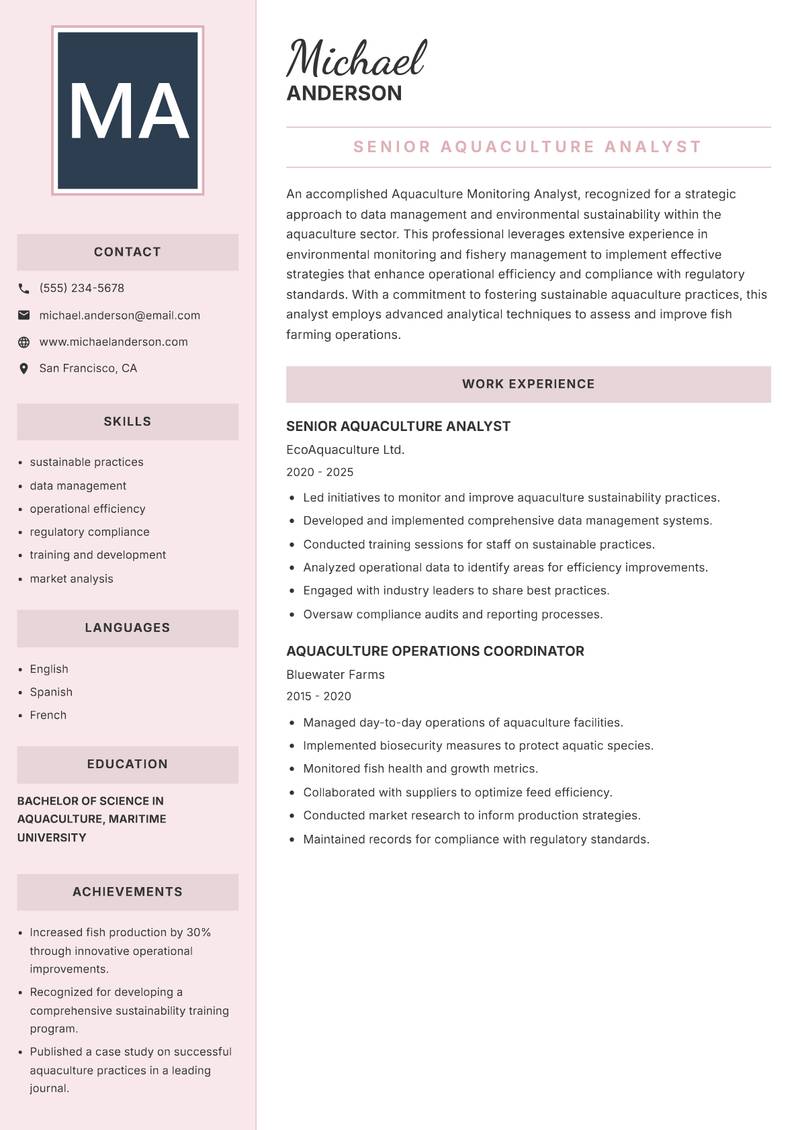
Senior Aquaculture Analyst Resume

An accomplished Aquaculture Monitoring Analyst, recognized for a strategic approach to data management and environmental sustainability within the aquaculture sector. This professional leverages extensive experience in environmental monitoring and fishery management to implement effective strategies that enhance operational efficiency and compliance with regulatory standards. With a commitment to fostering sustainable aquaculture practices, this analyst employs advanced analytical techniques to assess and improve fish farming operations. The capacity to synthesize complex data into coherent reports facilitates informed decision-making among stakeholders, ensuring alignment with ecological best practices. A proactive leader, adept at navigating the challenges of the aquaculture industry, this individual is dedicated to promoting innovations that drive productivity while safeguarding aquatic ecosystems. The integration of technology into monitoring processes exemplifies a forward-thinking mindset, essential for advancing the field of aquaculture.

sustainable practices data management operational efficiency regulatory compliance training and development market analysis
  1. Led initiatives to monitor and improve aquaculture sustainability practices.
  2. Developed and implemented comprehensive data management systems.
  3. Conducted training sessions for staff on sustainable practices.
  4. Analyzed operational data to identify areas for efficiency improvements.
  5. Engaged with industry leaders to share best practices.
  6. Oversaw compliance audits and reporting processes.
  1. Managed day-to-day operations of aquaculture facilities.
  2. Implemented biosecurity measures to protect aquatic species.
  3. Monitored fish health and growth metrics.
  4. Collaborated with suppliers to optimize feed efficiency.
  5. Conducted market research to inform production strategies.
  6. Maintained records for compliance with regulatory standards.

Achievements

  • Increased fish production by 30% through innovative operational improvements.
  • Recognized for developing a comprehensive sustainability training program.
  • Published a case study on successful aquaculture practices in a leading journal.
⏱️
Experience
2-5 Years
📅
Level
Mid Level
🎓
Education
Bachelor of Science in Aquacul...

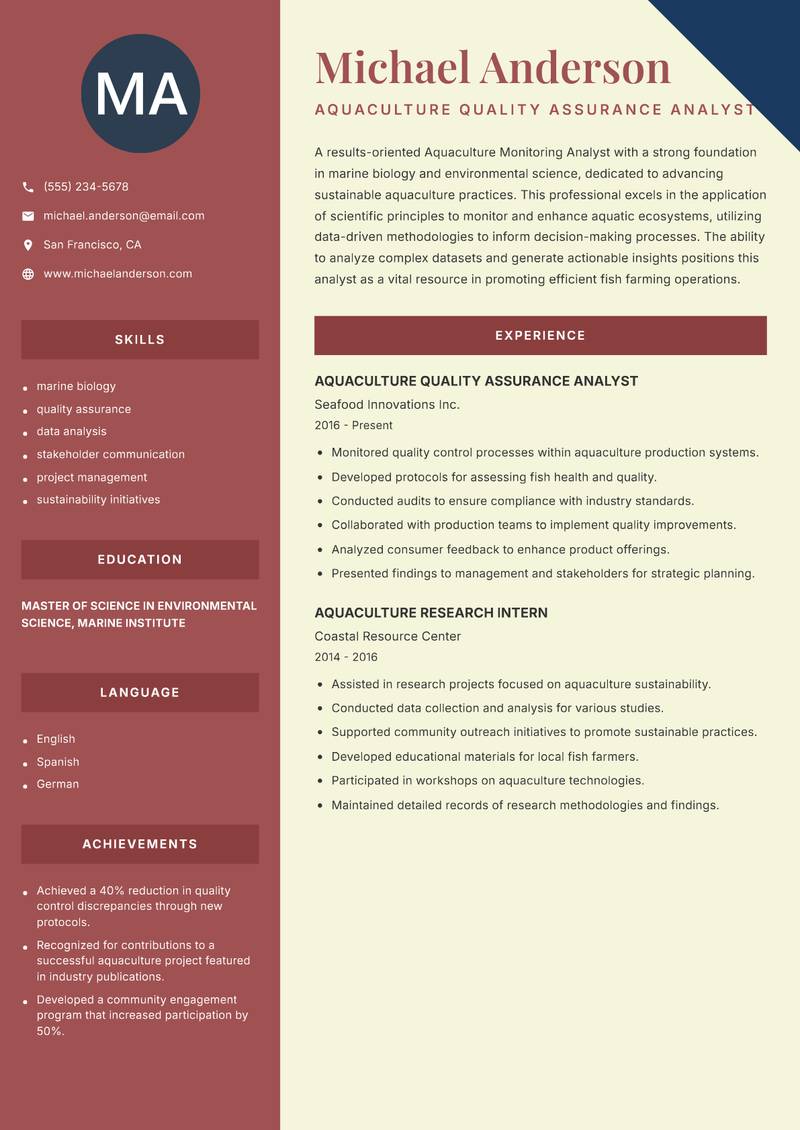
Aquaculture Quality Assurance Analyst Resume

A results-oriented Aquaculture Monitoring Analyst with a strong foundation in marine biology and environmental science, dedicated to advancing sustainable aquaculture practices. This professional excels in the application of scientific principles to monitor and enhance aquatic ecosystems, utilizing data-driven methodologies to inform decision-making processes. The ability to analyze complex datasets and generate actionable insights positions this analyst as a vital resource in promoting efficient fish farming operations. Exceptional communication skills facilitate collaboration with diverse stakeholders, ensuring the alignment of objectives with environmental sustainability goals. A proactive approach to problem-solving and project management has yielded significant improvements in aquaculture productivity and compliance with regulatory frameworks. Recognized for a commitment to continuous improvement and innovation, this analyst remains at the forefront of emerging trends and technologies within the aquaculture industry.

marine biology quality assurance data analysis stakeholder communication project management sustainability initiatives
  1. Monitored quality control processes within aquaculture production systems.
  2. Developed protocols for assessing fish health and quality.
  3. Conducted audits to ensure compliance with industry standards.
  4. Collaborated with production teams to implement quality improvements.
  5. Analyzed consumer feedback to enhance product offerings.
  6. Presented findings to management and stakeholders for strategic planning.
  1. Assisted in research projects focused on aquaculture sustainability.
  2. Conducted data collection and analysis for various studies.
  3. Supported community outreach initiatives to promote sustainable practices.
  4. Developed educational materials for local fish farmers.
  5. Participated in workshops on aquaculture technologies.
  6. Maintained detailed records of research methodologies and findings.

Achievements

  • Achieved a 40% reduction in quality control discrepancies through new protocols.
  • Recognized for contributions to a successful aquaculture project featured in industry publications.
  • Developed a community engagement program that increased participation by 50%.
⏱️
Experience
2-5 Years
📅
Level
Mid Level
🎓
Education
Master of Science in Environme...

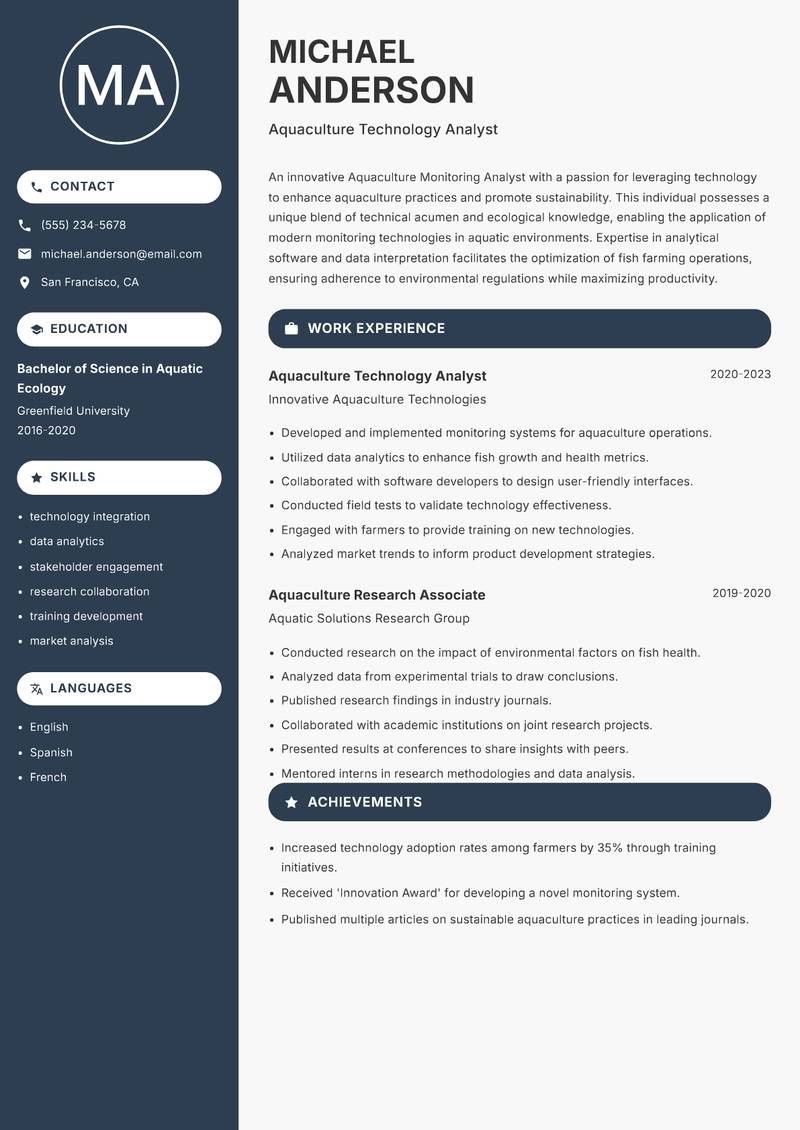
Aquaculture Technology Analyst Resume

An innovative Aquaculture Monitoring Analyst with a passion for leveraging technology to enhance aquaculture practices and promote sustainability. This individual possesses a unique blend of technical acumen and ecological knowledge, enabling the application of modern monitoring technologies in aquatic environments. Expertise in analytical software and data interpretation facilitates the optimization of fish farming operations, ensuring adherence to environmental regulations while maximizing productivity. A collaborative professional, adept at working alongside multidisciplinary teams to develop and implement effective monitoring strategies. This analyst's commitment to research and continuous improvement is evidenced by successful projects that have significantly advanced the understanding of aquaculture sustainability. Engaging with stakeholders and communities fosters a shared vision for responsible aquaculture, ensuring the alignment of industry practices with ecological integrity.

technology integration data analytics stakeholder engagement research collaboration training development market analysis
  1. Developed and implemented monitoring systems for aquaculture operations.
  2. Utilized data analytics to enhance fish growth and health metrics.
  3. Collaborated with software developers to design user-friendly interfaces.
  4. Conducted field tests to validate technology effectiveness.
  5. Engaged with farmers to provide training on new technologies.
  6. Analyzed market trends to inform product development strategies.
  1. Conducted research on the impact of environmental factors on fish health.
  2. Analyzed data from experimental trials to draw conclusions.
  3. Published research findings in industry journals.
  4. Collaborated with academic institutions on joint research projects.
  5. Presented results at conferences to share insights with peers.
  6. Mentored interns in research methodologies and data analysis.

Achievements

  • Increased technology adoption rates among farmers by 35% through training initiatives.
  • Received 'Innovation Award' for developing a novel monitoring system.
  • Published multiple articles on sustainable aquaculture practices in leading journals.
⏱️
Experience
2-5 Years
📅
Level
Mid Level
🎓
Education
Bachelor of Science in Aquatic...

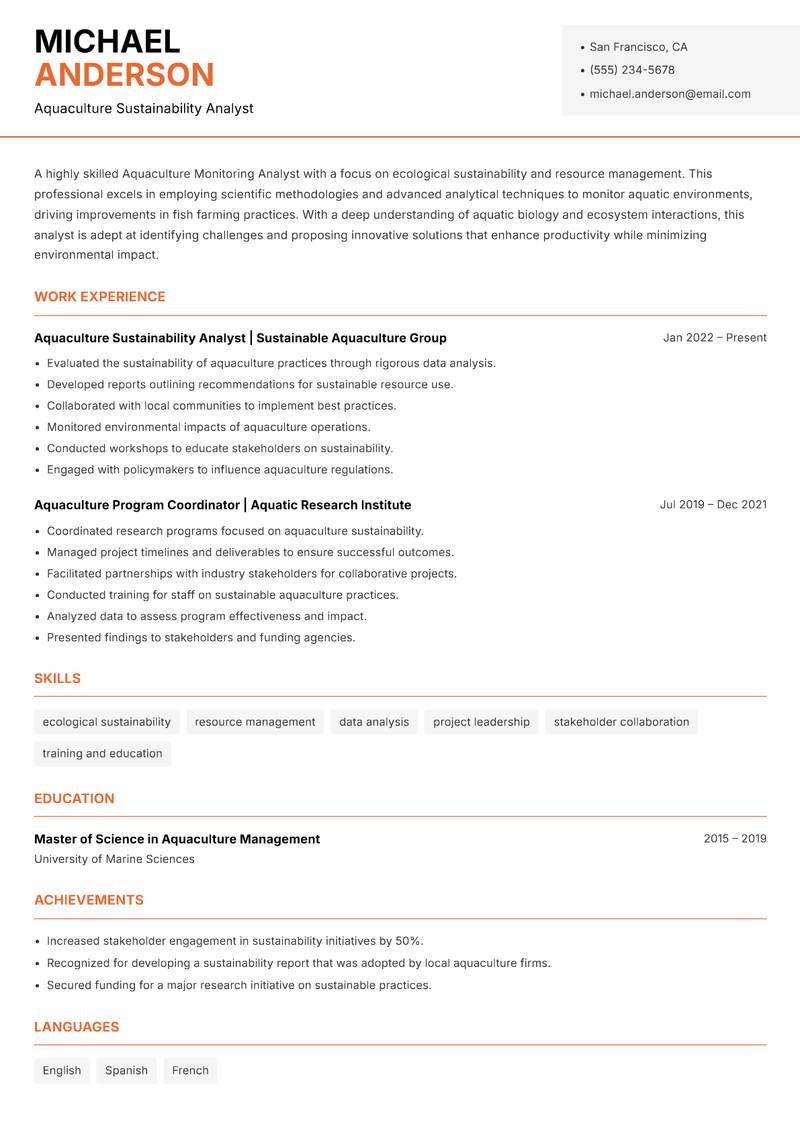
Aquaculture Sustainability Analyst Resume

A highly skilled Aquaculture Monitoring Analyst with a focus on ecological sustainability and resource management. This professional excels in employing scientific methodologies and advanced analytical techniques to monitor aquatic environments, driving improvements in fish farming practices. With a deep understanding of aquatic biology and ecosystem interactions, this analyst is adept at identifying challenges and proposing innovative solutions that enhance productivity while minimizing environmental impact. A strong communicator, capable of translating complex data into accessible reports, fostering collaboration among stakeholders. The ability to lead projects effectively ensures the successful implementation of sustainable practices within aquaculture operations. An advocate for continuous learning and adaptation, this analyst remains engaged with the latest advancements in technology and science to enhance aquaculture methodologies.

ecological sustainability resource management data analysis project leadership stakeholder collaboration training and education
  1. Evaluated the sustainability of aquaculture practices through rigorous data analysis.
  2. Developed reports outlining recommendations for sustainable resource use.
  3. Collaborated with local communities to implement best practices.
  4. Monitored environmental impacts of aquaculture operations.
  5. Conducted workshops to educate stakeholders on sustainability.
  6. Engaged with policymakers to influence aquaculture regulations.
  1. Coordinated research programs focused on aquaculture sustainability.
  2. Managed project timelines and deliverables to ensure successful outcomes.
  3. Facilitated partnerships with industry stakeholders for collaborative projects.
  4. Conducted training for staff on sustainable aquaculture practices.
  5. Analyzed data to assess program effectiveness and impact.
  6. Presented findings to stakeholders and funding agencies.

Achievements

  • Increased stakeholder engagement in sustainability initiatives by 50%.
  • Recognized for developing a sustainability report that was adopted by local aquaculture firms.
  • Secured funding for a major research initiative on sustainable practices.
⏱️
Experience
2-5 Years
📅
Level
Mid Level
🎓
Education
Master of Science in Aquacultu...

Key Skills for Aquaculture Monitoring Analyst Positions

Successful aquaculture monitoring analyst professionals typically possess a combination of technical expertise, soft skills, and industry knowledge. Common skills include problem-solving abilities, attention to detail, communication skills, and proficiency in relevant tools and technologies specific to the role.

Typical Responsibilities

Aquaculture Monitoring Analyst roles often involve a range of responsibilities that may include project management, collaboration with cross-functional teams, meeting deadlines, maintaining quality standards, and contributing to organizational goals. Specific duties vary by company and seniority level.

Resume Tips for Aquaculture Monitoring Analyst Applications

ATS Optimization

Applicant Tracking Systems (ATS) scan resumes for keywords and formatting. To optimize your aquaculture monitoring analyst resume for ATS:

Frequently Asked Questions

How do I customize this aquaculture monitoring analyst resume template?

You can customize this resume template by replacing the placeholder content with your own information. Update the professional summary, work experience, education, and skills sections to match your background. Ensure all dates, company names, and achievements are accurate and relevant to your career history.

Is this aquaculture monitoring analyst resume template ATS-friendly?

Yes, this resume template is designed to be ATS-friendly. It uses standard section headings, clear formatting, and avoids complex graphics or tables that can confuse applicant tracking systems. The structure follows best practices for ATS compatibility, making it easier for your resume to be parsed correctly by automated systems.

What is the ideal length for a aquaculture monitoring analyst resume?

For most aquaculture monitoring analyst positions, a one to two-page resume is ideal. Entry-level candidates should aim for one page, while experienced professionals with extensive work history may use two pages. Focus on the most relevant and recent experience, and ensure every section adds value to your application.

How should I format my aquaculture monitoring analyst resume for best results?

Use a clean, professional format with consistent fonts and spacing. Include standard sections such as Contact Information, Professional Summary, Work Experience, Education, and Skills. Use bullet points for easy scanning, and ensure your contact information is clearly visible at the top. Save your resume as a PDF to preserve formatting across different devices and systems.

Can I use this template for different aquaculture monitoring analyst job applications?

Yes, you can use this template as a base for multiple applications. However, it's recommended to tailor your resume for each specific job posting. Review the job description carefully and incorporate relevant keywords, skills, and experiences that match the requirements. Customizing your resume for each application increases your chances of passing ATS filters and catching the attention of hiring managers.

Scroll to view samples