Tissue Engineering Scientist Resume

As a Tissue Engineering Scientist, you will play a pivotal role in the development of cutting-edge biomaterials and scaffolds for tissue regeneration. Your expertise in cell biology, material science, and engineering principles will contribute to the creation and optimization of novel tissue constructs aimed at repairing or replacing damaged tissues and organs. In this position, you will design and conduct experiments to evaluate the biocompatibility and functionality of engineered tissues. Collaborating with multidisciplinary teams, you will analyze data, publish findings, and present your work at scientific conferences. Your contributions will help propel our research initiatives and bring transformative therapies to clinical application.

0.0 (0 ratings)

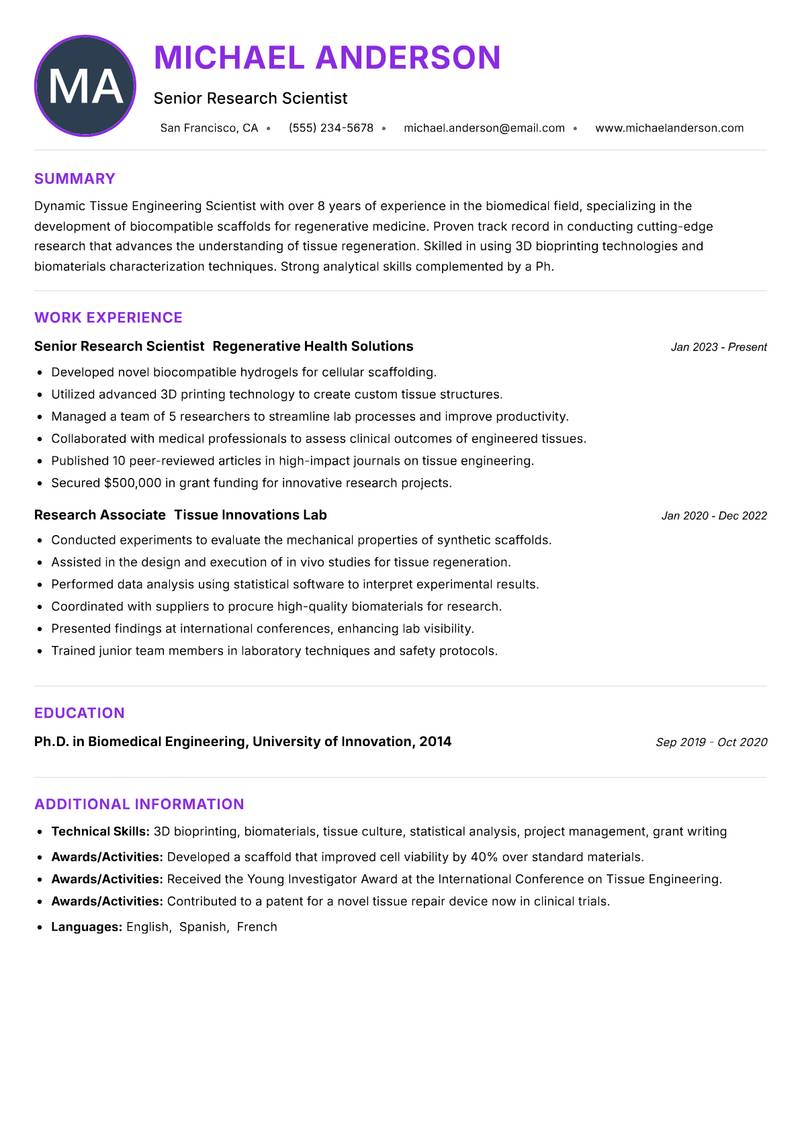
Senior Research Scientist Resume

Dynamic Tissue Engineering Scientist with over 8 years of experience in the biomedical field, specializing in the development of biocompatible scaffolds for regenerative medicine. Proven track record in conducting cutting-edge research that advances the understanding of tissue regeneration. Skilled in using 3D bioprinting technologies and biomaterials characterization techniques. Strong analytical skills complemented by a Ph.D. in Biomedical Engineering from a reputable university. Passionate about translating laboratory findings into clinical applications. Recognized for collaborative work with cross-functional teams to drive innovative solutions in tissue engineering. Committed to continuous professional development and staying abreast of emerging trends in the field.

3D bioprinting biomaterials tissue culture statistical analysis project management grant writing
  1. Developed novel biocompatible hydrogels for cellular scaffolding.
  2. Utilized advanced 3D printing technology to create custom tissue structures.
  3. Managed a team of 5 researchers to streamline lab processes and improve productivity.
  4. Collaborated with medical professionals to assess clinical outcomes of engineered tissues.
  5. Published 10 peer-reviewed articles in high-impact journals on tissue engineering.
  6. Secured $500,000 in grant funding for innovative research projects.
  1. Conducted experiments to evaluate the mechanical properties of synthetic scaffolds.
  2. Assisted in the design and execution of in vivo studies for tissue regeneration.
  3. Performed data analysis using statistical software to interpret experimental results.
  4. Coordinated with suppliers to procure high-quality biomaterials for research.
  5. Presented findings at international conferences, enhancing lab visibility.
  6. Trained junior team members in laboratory techniques and safety protocols.

Achievements

  • Developed a scaffold that improved cell viability by 40% over standard materials.
  • Received the Young Investigator Award at the International Conference on Tissue Engineering.
  • Contributed to a patent for a novel tissue repair device now in clinical trials.
⏱️
Experience
2-5 Years
📅
Level
Mid Level
🎓
Education
Ph.D. in Biomedical Engineerin...

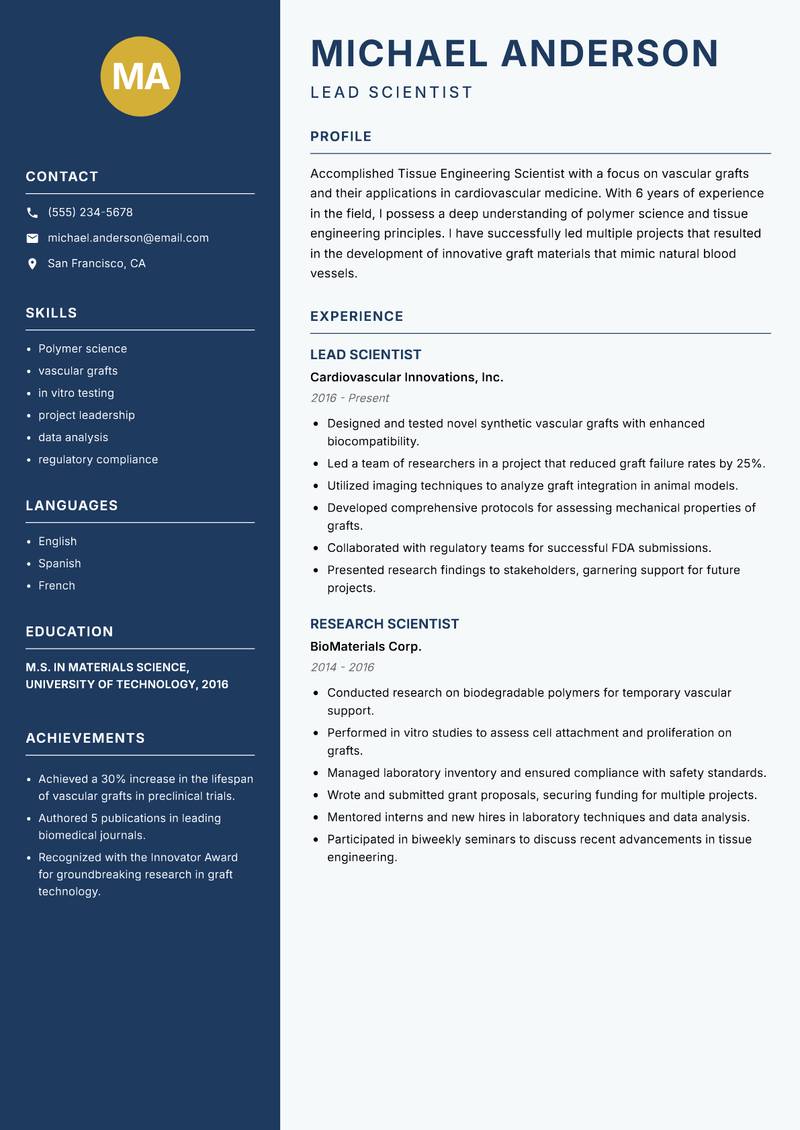
Lead Scientist Resume

Accomplished Tissue Engineering Scientist with a focus on vascular grafts and their applications in cardiovascular medicine. With 6 years of experience in the field, I possess a deep understanding of polymer science and tissue engineering principles. I have successfully led multiple projects that resulted in the development of innovative graft materials that mimic natural blood vessels. My strong communication skills enable me to collaborate effectively with interdisciplinary teams and convey complex concepts to non-specialists. I hold a Master's degree in Materials Science and engage actively in scientific communities to share knowledge and best practices.

Polymer science vascular grafts in vitro testing project leadership data analysis regulatory compliance
  1. Designed and tested novel synthetic vascular grafts with enhanced biocompatibility.
  2. Led a team of researchers in a project that reduced graft failure rates by 25%.
  3. Utilized imaging techniques to analyze graft integration in animal models.
  4. Developed comprehensive protocols for assessing mechanical properties of grafts.
  5. Collaborated with regulatory teams for successful FDA submissions.
  6. Presented research findings to stakeholders, garnering support for future projects.
  1. Conducted research on biodegradable polymers for temporary vascular support.
  2. Performed in vitro studies to assess cell attachment and proliferation on grafts.
  3. Managed laboratory inventory and ensured compliance with safety standards.
  4. Wrote and submitted grant proposals, securing funding for multiple projects.
  5. Mentored interns and new hires in laboratory techniques and data analysis.
  6. Participated in biweekly seminars to discuss recent advancements in tissue engineering.

Achievements

  • Achieved a 30% increase in the lifespan of vascular grafts in preclinical trials.
  • Authored 5 publications in leading biomedical journals.
  • Recognized with the Innovator Award for groundbreaking research in graft technology.
⏱️
Experience
2-5 Years
📅
Level
Mid Level
🎓
Education
M.S. in Materials Science, Uni...

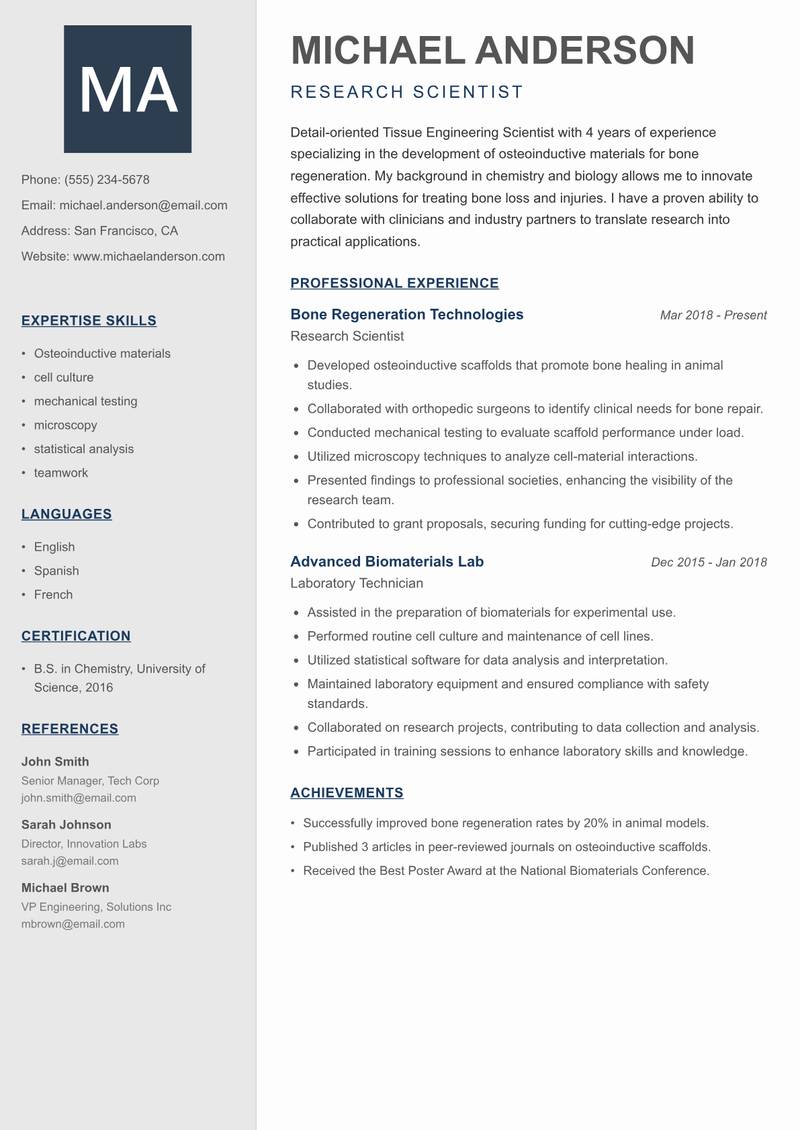
Research Scientist Resume

Detail-oriented Tissue Engineering Scientist with 4 years of experience specializing in the development of osteoinductive materials for bone regeneration. My background in chemistry and biology allows me to innovate effective solutions for treating bone loss and injuries. I have a proven ability to collaborate with clinicians and industry partners to translate research into practical applications. I am passionate about improving patient outcomes through advanced tissue engineering techniques. My research has led to the publication of multiple articles in respected journals, and I actively seek to enhance my expertise through continuous learning and professional development.

Osteoinductive materials cell culture mechanical testing microscopy statistical analysis teamwork
  1. Developed osteoinductive scaffolds that promote bone healing in animal studies.
  2. Collaborated with orthopedic surgeons to identify clinical needs for bone repair.
  3. Conducted mechanical testing to evaluate scaffold performance under load.
  4. Utilized microscopy techniques to analyze cell-material interactions.
  5. Presented findings to professional societies, enhancing the visibility of the research team.
  6. Contributed to grant proposals, securing funding for cutting-edge projects.
  1. Assisted in the preparation of biomaterials for experimental use.
  2. Performed routine cell culture and maintenance of cell lines.
  3. Utilized statistical software for data analysis and interpretation.
  4. Maintained laboratory equipment and ensured compliance with safety standards.
  5. Collaborated on research projects, contributing to data collection and analysis.
  6. Participated in training sessions to enhance laboratory skills and knowledge.

Achievements

  • Successfully improved bone regeneration rates by 20% in animal models.
  • Published 3 articles in peer-reviewed journals on osteoinductive scaffolds.
  • Received the Best Poster Award at the National Biomaterials Conference.
⏱️
Experience
2-5 Years
📅
Level
Mid Level
🎓
Education
B.S. in Chemistry, University ...

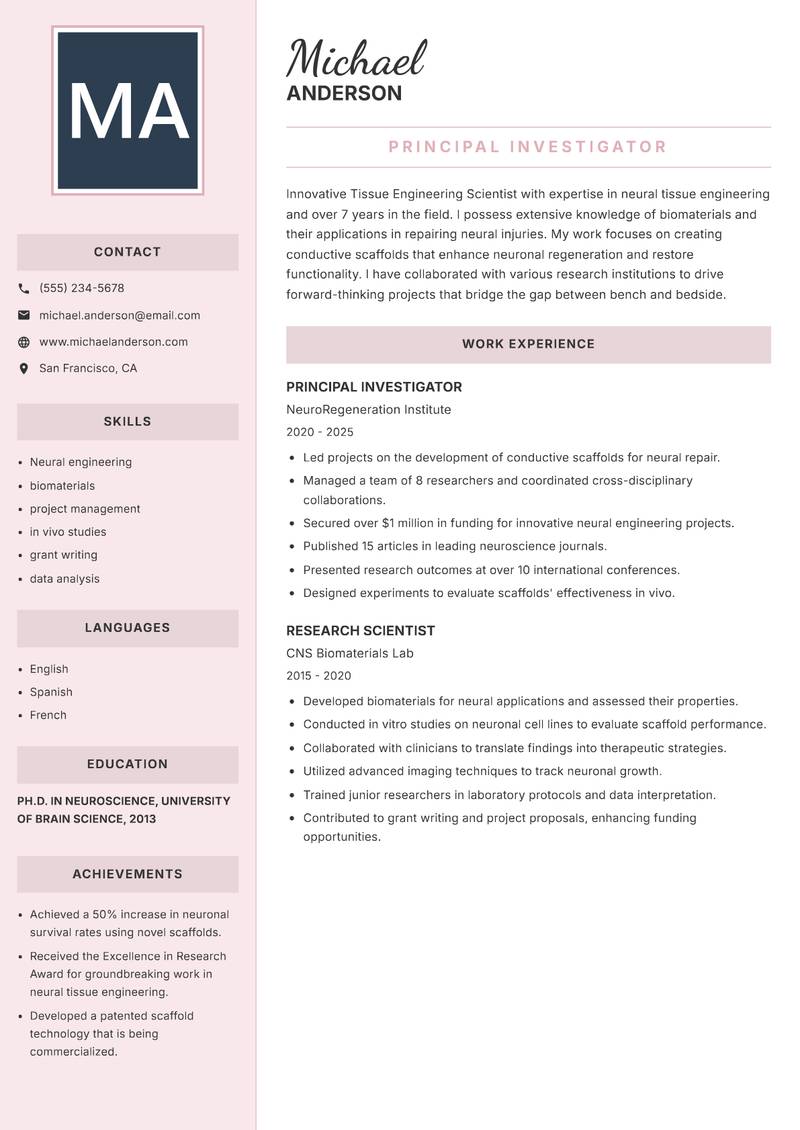
Principal Investigator Resume

Innovative Tissue Engineering Scientist with expertise in neural tissue engineering and over 7 years in the field. I possess extensive knowledge of biomaterials and their applications in repairing neural injuries. My work focuses on creating conductive scaffolds that enhance neuronal regeneration and restore functionality. I have collaborated with various research institutions to drive forward-thinking projects that bridge the gap between bench and bedside. With a Ph.D. in Neuroscience, I am dedicated to advancing research that improves the lives of patients with neurological disorders. I have published numerous articles and presented findings at international conferences, establishing myself as a thought leader in the field.

Neural engineering biomaterials project management in vivo studies grant writing data analysis
  1. Led projects on the development of conductive scaffolds for neural repair.
  2. Managed a team of 8 researchers and coordinated cross-disciplinary collaborations.
  3. Secured over $1 million in funding for innovative neural engineering projects.
  4. Published 15 articles in leading neuroscience journals.
  5. Presented research outcomes at over 10 international conferences.
  6. Designed experiments to evaluate scaffolds' effectiveness in vivo.
  1. Developed biomaterials for neural applications and assessed their properties.
  2. Conducted in vitro studies on neuronal cell lines to evaluate scaffold performance.
  3. Collaborated with clinicians to translate findings into therapeutic strategies.
  4. Utilized advanced imaging techniques to track neuronal growth.
  5. Trained junior researchers in laboratory protocols and data interpretation.
  6. Contributed to grant writing and project proposals, enhancing funding opportunities.

Achievements

  • Achieved a 50% increase in neuronal survival rates using novel scaffolds.
  • Received the Excellence in Research Award for groundbreaking work in neural tissue engineering.
  • Developed a patented scaffold technology that is being commercialized.
⏱️
Experience
2-5 Years
📅
Level
Mid Level
🎓
Education
Ph.D. in Neuroscience, Univers...

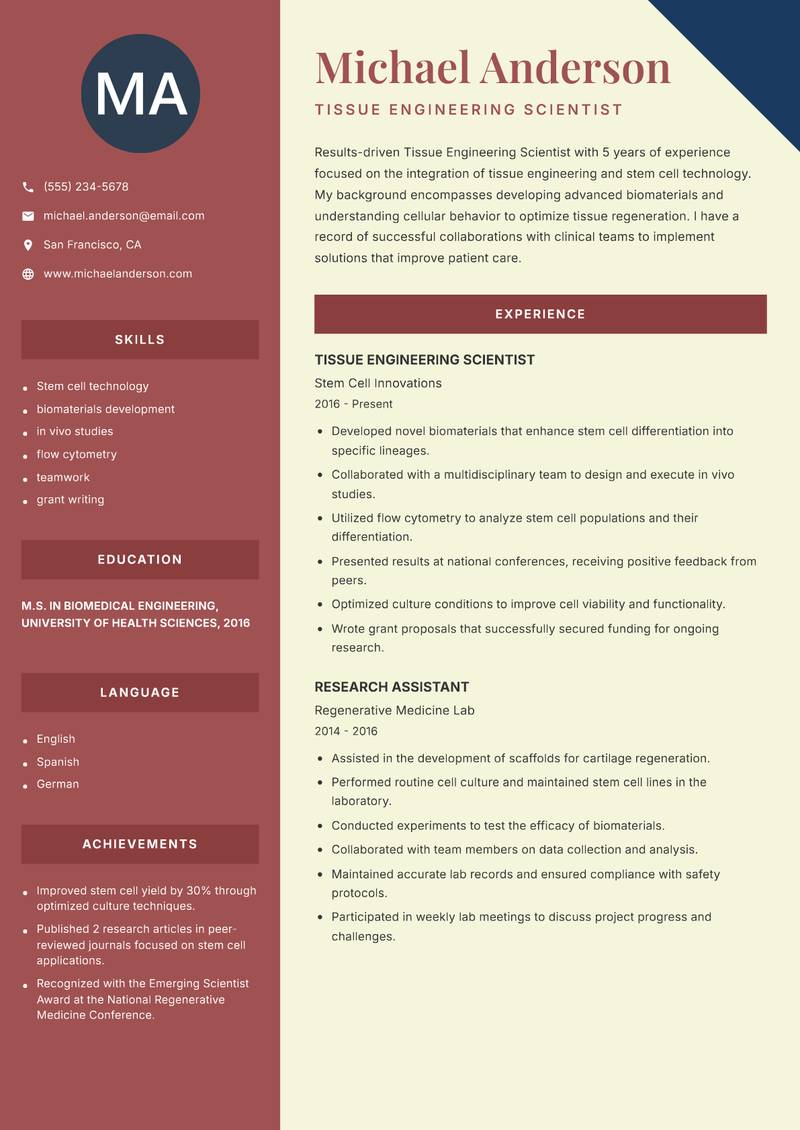
Tissue Engineering Scientist Resume

Results-driven Tissue Engineering Scientist with 5 years of experience focused on the integration of tissue engineering and stem cell technology. My background encompasses developing advanced biomaterials and understanding cellular behavior to optimize tissue regeneration. I have a record of successful collaborations with clinical teams to implement solutions that improve patient care. Possessing a Master's degree in Biomedical Engineering, I am committed to ongoing research and professional growth in the field. My passion lies in creating innovative therapies that harness the power of stem cells for regenerative medicine, and I have presented my work at several national conferences.

Stem cell technology biomaterials development in vivo studies flow cytometry teamwork grant writing
  1. Developed novel biomaterials that enhance stem cell differentiation into specific lineages.
  2. Collaborated with a multidisciplinary team to design and execute in vivo studies.
  3. Utilized flow cytometry to analyze stem cell populations and their differentiation.
  4. Presented results at national conferences, receiving positive feedback from peers.
  5. Optimized culture conditions to improve cell viability and functionality.
  6. Wrote grant proposals that successfully secured funding for ongoing research.
  1. Assisted in the development of scaffolds for cartilage regeneration.
  2. Performed routine cell culture and maintained stem cell lines in the laboratory.
  3. Conducted experiments to test the efficacy of biomaterials.
  4. Collaborated with team members on data collection and analysis.
  5. Maintained accurate lab records and ensured compliance with safety protocols.
  6. Participated in weekly lab meetings to discuss project progress and challenges.

Achievements

  • Improved stem cell yield by 30% through optimized culture techniques.
  • Published 2 research articles in peer-reviewed journals focused on stem cell applications.
  • Recognized with the Emerging Scientist Award at the National Regenerative Medicine Conference.
⏱️
Experience
2-5 Years
📅
Level
Mid Level
🎓
Education
M.S. in Biomedical Engineering...

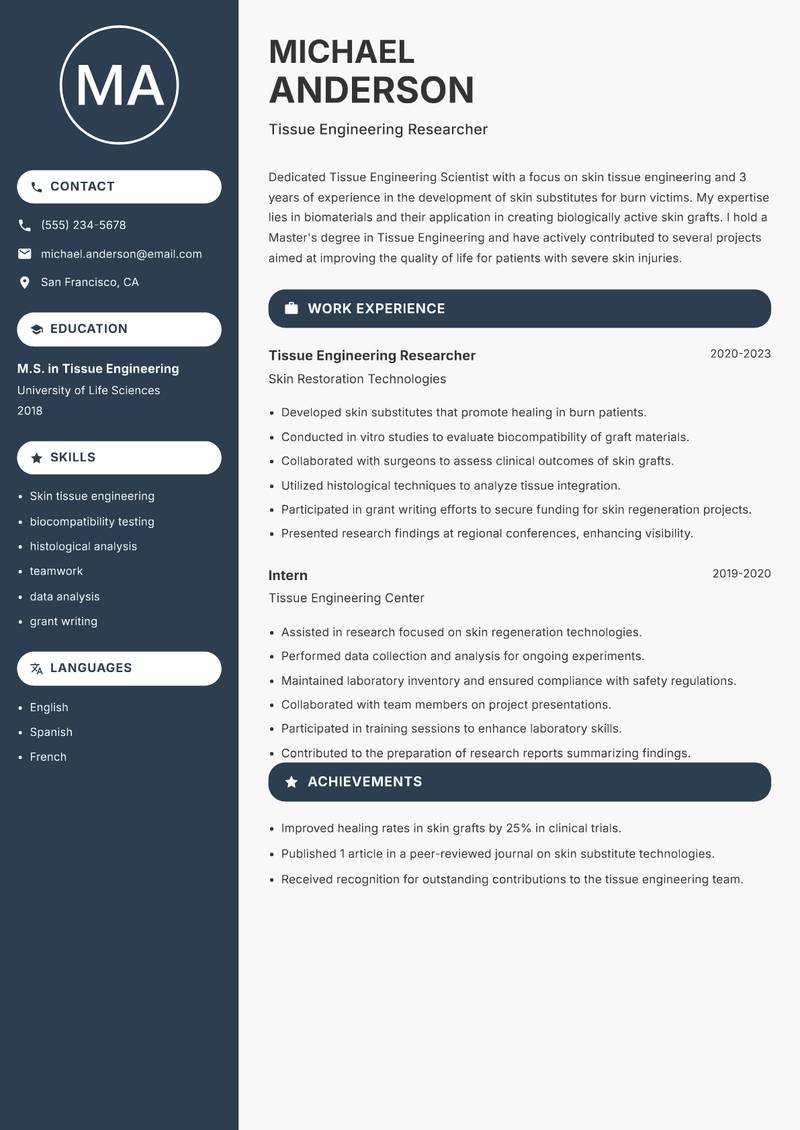
Tissue Engineering Researcher Resume

Dedicated Tissue Engineering Scientist with a focus on skin tissue engineering and 3 years of experience in the development of skin substitutes for burn victims. My expertise lies in biomaterials and their application in creating biologically active skin grafts. I hold a Master's degree in Tissue Engineering and have actively contributed to several projects aimed at improving the quality of life for patients with severe skin injuries. I am proficient in conducting both in vitro and in vivo studies and have a strong commitment to advancing the field through innovative research and collaboration with healthcare professionals.

Skin tissue engineering biocompatibility testing histological analysis teamwork data analysis grant writing
  1. Developed skin substitutes that promote healing in burn patients.
  2. Conducted in vitro studies to evaluate biocompatibility of graft materials.
  3. Collaborated with surgeons to assess clinical outcomes of skin grafts.
  4. Utilized histological techniques to analyze tissue integration.
  5. Participated in grant writing efforts to secure funding for skin regeneration projects.
  6. Presented research findings at regional conferences, enhancing visibility.
  1. Assisted in research focused on skin regeneration technologies.
  2. Performed data collection and analysis for ongoing experiments.
  3. Maintained laboratory inventory and ensured compliance with safety regulations.
  4. Collaborated with team members on project presentations.
  5. Participated in training sessions to enhance laboratory skills.
  6. Contributed to the preparation of research reports summarizing findings.

Achievements

  • Improved healing rates in skin grafts by 25% in clinical trials.
  • Published 1 article in a peer-reviewed journal on skin substitute technologies.
  • Received recognition for outstanding contributions to the tissue engineering team.
⏱️
Experience
2-5 Years
📅
Level
Mid Level
🎓
Education
M.S. in Tissue Engineering, Un...

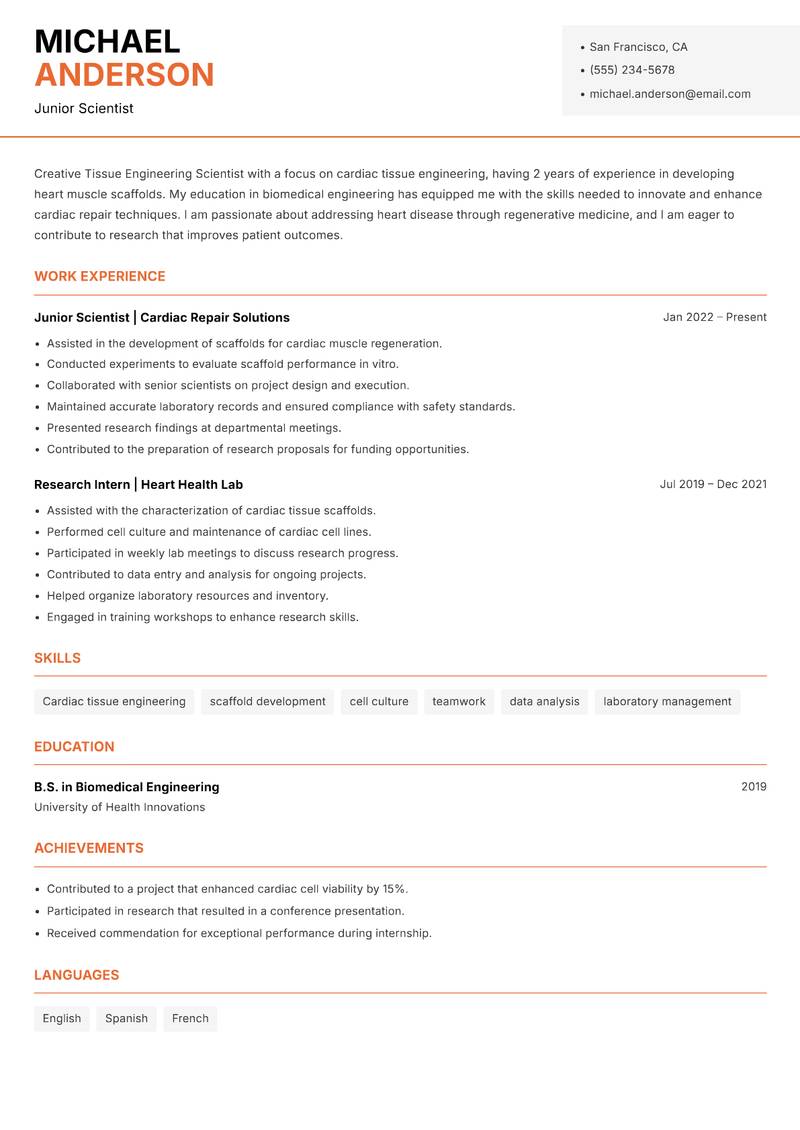
Junior Scientist Resume

Creative Tissue Engineering Scientist with a focus on cardiac tissue engineering, having 2 years of experience in developing heart muscle scaffolds. My education in biomedical engineering has equipped me with the skills needed to innovate and enhance cardiac repair techniques. I am passionate about addressing heart disease through regenerative medicine, and I am eager to contribute to research that improves patient outcomes. I have collaborated with clinicians to understand the challenges faced in cardiac health and am committed to finding solutions through interdisciplinary approaches. My goal is to further my expertise in tissue engineering while contributing to impactful projects.

Cardiac tissue engineering scaffold development cell culture teamwork data analysis laboratory management
  1. Assisted in the development of scaffolds for cardiac muscle regeneration.
  2. Conducted experiments to evaluate scaffold performance in vitro.
  3. Collaborated with senior scientists on project design and execution.
  4. Maintained accurate laboratory records and ensured compliance with safety standards.
  5. Presented research findings at departmental meetings.
  6. Contributed to the preparation of research proposals for funding opportunities.
  1. Assisted with the characterization of cardiac tissue scaffolds.
  2. Performed cell culture and maintenance of cardiac cell lines.
  3. Participated in weekly lab meetings to discuss research progress.
  4. Contributed to data entry and analysis for ongoing projects.
  5. Helped organize laboratory resources and inventory.
  6. Engaged in training workshops to enhance research skills.

Achievements

  • Contributed to a project that enhanced cardiac cell viability by 15%.
  • Participated in research that resulted in a conference presentation.
  • Received commendation for exceptional performance during internship.
⏱️
Experience
2-5 Years
📅
Level
Mid Level
🎓
Education
B.S. in Biomedical Engineering...

Key Skills for Tissue Engineering Scientist Positions

Successful tissue engineering scientist professionals typically possess a combination of technical expertise, soft skills, and industry knowledge. Common skills include problem-solving abilities, attention to detail, communication skills, and proficiency in relevant tools and technologies specific to the role.

Typical Responsibilities

Tissue Engineering Scientist roles often involve a range of responsibilities that may include project management, collaboration with cross-functional teams, meeting deadlines, maintaining quality standards, and contributing to organizational goals. Specific duties vary by company and seniority level.

Resume Tips for Tissue Engineering Scientist Applications

ATS Optimization

Applicant Tracking Systems (ATS) scan resumes for keywords and formatting. To optimize your tissue engineering scientist resume for ATS:

Frequently Asked Questions

How do I customize this tissue engineering scientist resume template?

You can customize this resume template by replacing the placeholder content with your own information. Update the professional summary, work experience, education, and skills sections to match your background. Ensure all dates, company names, and achievements are accurate and relevant to your career history.

Is this tissue engineering scientist resume template ATS-friendly?

Yes, this resume template is designed to be ATS-friendly. It uses standard section headings, clear formatting, and avoids complex graphics or tables that can confuse applicant tracking systems. The structure follows best practices for ATS compatibility, making it easier for your resume to be parsed correctly by automated systems.

What is the ideal length for a tissue engineering scientist resume?

For most tissue engineering scientist positions, a one to two-page resume is ideal. Entry-level candidates should aim for one page, while experienced professionals with extensive work history may use two pages. Focus on the most relevant and recent experience, and ensure every section adds value to your application.

How should I format my tissue engineering scientist resume for best results?

Use a clean, professional format with consistent fonts and spacing. Include standard sections such as Contact Information, Professional Summary, Work Experience, Education, and Skills. Use bullet points for easy scanning, and ensure your contact information is clearly visible at the top. Save your resume as a PDF to preserve formatting across different devices and systems.

Can I use this template for different tissue engineering scientist job applications?

Yes, you can use this template as a base for multiple applications. However, it's recommended to tailor your resume for each specific job posting. Review the job description carefully and incorporate relevant keywords, skills, and experiences that match the requirements. Customizing your resume for each application increases your chances of passing ATS filters and catching the attention of hiring managers.

Scroll to view samples