Astronautical Engineer Resume

As an Astronautical Engineer, you will play a crucial role in the design, development, and testing of spacecraft and satellite systems. Your expertise will be essential in ensuring that these complex systems function effectively in the harsh conditions of space. You will collaborate with a multidisciplinary team of engineers and scientists to innovate and implement advanced technologies that push the boundaries of space exploration. In this position, you will conduct research, perform simulations, and analyze data to optimize spacecraft performance. You will also be responsible for creating detailed technical documentation and presenting findings to stakeholders. A solid understanding of propulsion systems, orbital mechanics, and materials science will be essential to succeed in this role, as will the ability to troubleshoot and solve engineering challenges in a fast-paced environment.

0.0 (0 ratings)

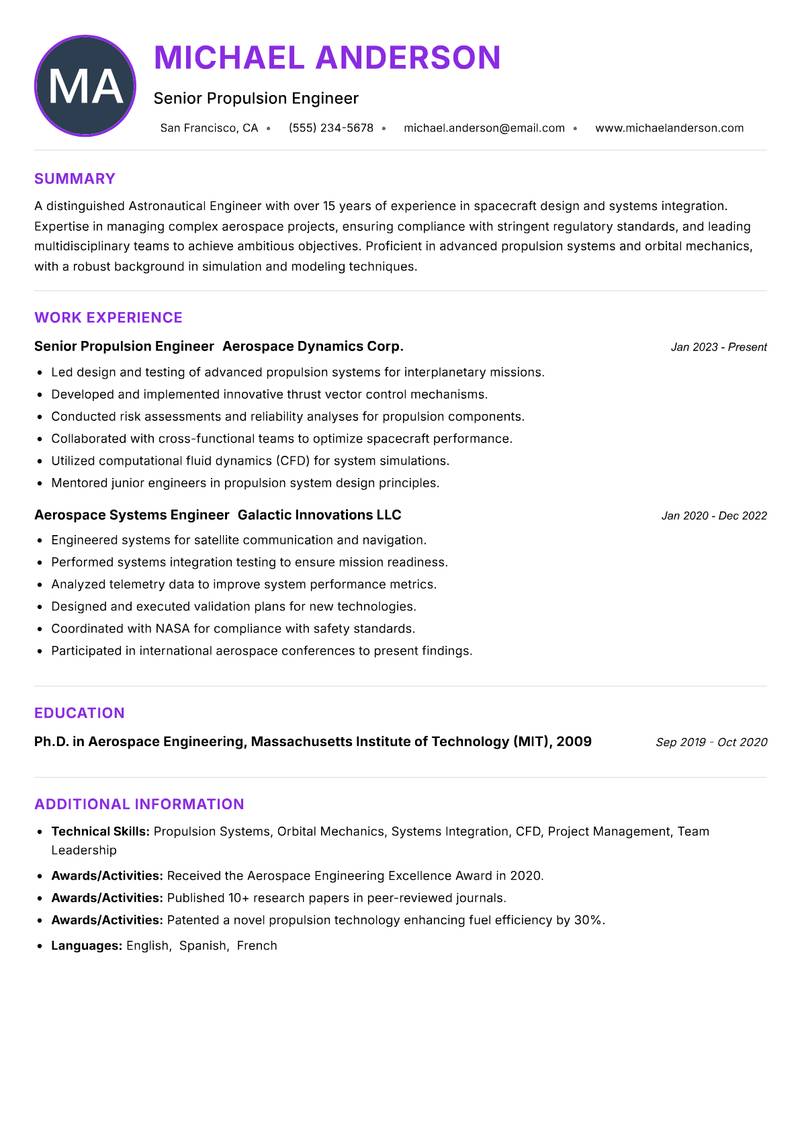
Senior Propulsion Engineer Resume

A distinguished Astronautical Engineer with over 15 years of experience in spacecraft design and systems integration. Expertise in managing complex aerospace projects, ensuring compliance with stringent regulatory standards, and leading multidisciplinary teams to achieve ambitious objectives. Proficient in advanced propulsion systems and orbital mechanics, with a robust background in simulation and modeling techniques. A proven track record of delivering innovative solutions to enhance spacecraft performance and reliability. Recognized for exceptional analytical skills and the ability to translate technical concepts into actionable strategies. Committed to advancing the frontiers of space exploration through cutting-edge engineering practices and collaborative leadership. Holds multiple patents in propulsion technology, contributing to the development of next-generation aerospace systems.

Propulsion Systems Orbital Mechanics Systems Integration CFD Project Management Team Leadership
  1. Led design and testing of advanced propulsion systems for interplanetary missions.
  2. Developed and implemented innovative thrust vector control mechanisms.
  3. Conducted risk assessments and reliability analyses for propulsion components.
  4. Collaborated with cross-functional teams to optimize spacecraft performance.
  5. Utilized computational fluid dynamics (CFD) for system simulations.
  6. Mentored junior engineers in propulsion system design principles.
  1. Engineered systems for satellite communication and navigation.
  2. Performed systems integration testing to ensure mission readiness.
  3. Analyzed telemetry data to improve system performance metrics.
  4. Designed and executed validation plans for new technologies.
  5. Coordinated with NASA for compliance with safety standards.
  6. Participated in international aerospace conferences to present findings.

Achievements

  • Received the Aerospace Engineering Excellence Award in 2020.
  • Published 10+ research papers in peer-reviewed journals.
  • Patented a novel propulsion technology enhancing fuel efficiency by 30%.
⏱️
Experience
2-5 Years
📅
Level
Mid Level
🎓
Education
Ph.D. in Aerospace Engineering...

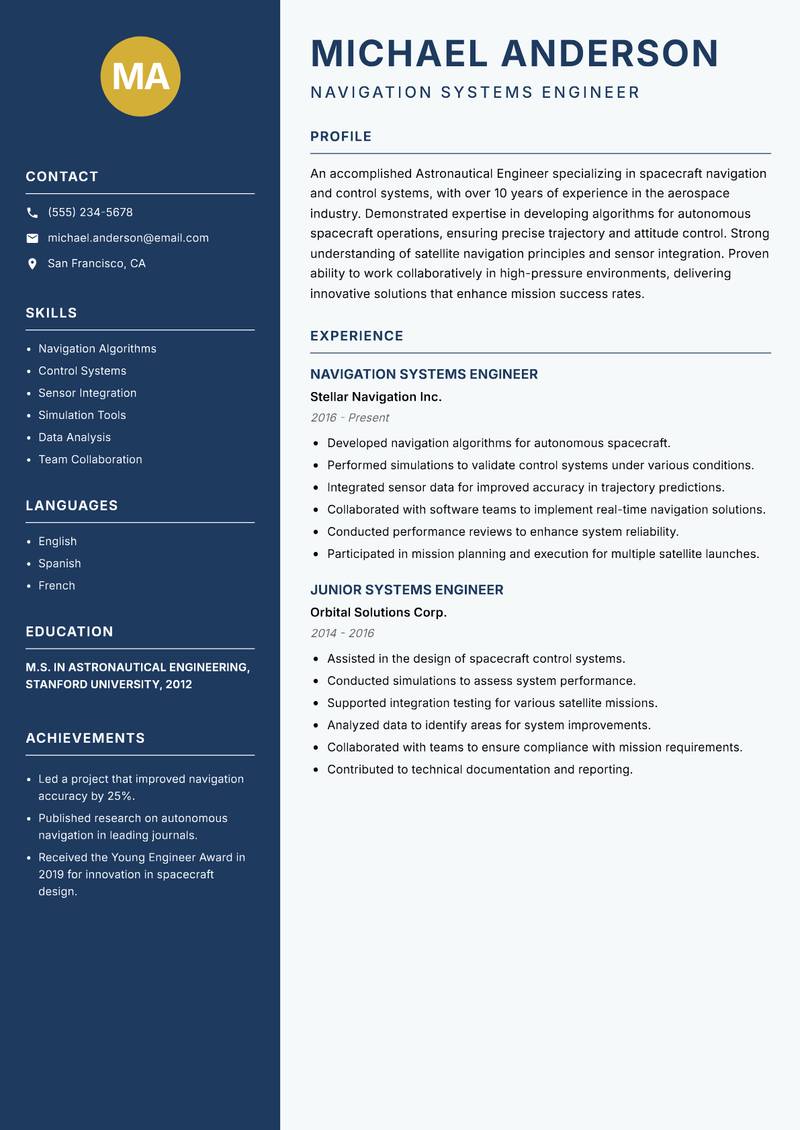
Navigation Systems Engineer Resume

An accomplished Astronautical Engineer specializing in spacecraft navigation and control systems, with over 10 years of experience in the aerospace industry. Demonstrated expertise in developing algorithms for autonomous spacecraft operations, ensuring precise trajectory and attitude control. Strong understanding of satellite navigation principles and sensor integration. Proven ability to work collaboratively in high-pressure environments, delivering innovative solutions that enhance mission success rates. Adept at utilizing cutting-edge simulation tools to validate design concepts and optimize performance. Committed to fostering a culture of safety and excellence in aerospace engineering practices. Holds a Master’s degree in Astronautical Engineering from a prestigious institution.

Navigation Algorithms Control Systems Sensor Integration Simulation Tools Data Analysis Team Collaboration
  1. Developed navigation algorithms for autonomous spacecraft.
  2. Performed simulations to validate control systems under various conditions.
  3. Integrated sensor data for improved accuracy in trajectory predictions.
  4. Collaborated with software teams to implement real-time navigation solutions.
  5. Conducted performance reviews to enhance system reliability.
  6. Participated in mission planning and execution for multiple satellite launches.
  1. Assisted in the design of spacecraft control systems.
  2. Conducted simulations to assess system performance.
  3. Supported integration testing for various satellite missions.
  4. Analyzed data to identify areas for system improvements.
  5. Collaborated with teams to ensure compliance with mission requirements.
  6. Contributed to technical documentation and reporting.

Achievements

  • Led a project that improved navigation accuracy by 25%.
  • Published research on autonomous navigation in leading journals.
  • Received the Young Engineer Award in 2019 for innovation in spacecraft design.
⏱️
Experience
2-5 Years
📅
Level
Mid Level
🎓
Education
M.S. in Astronautical Engineer...

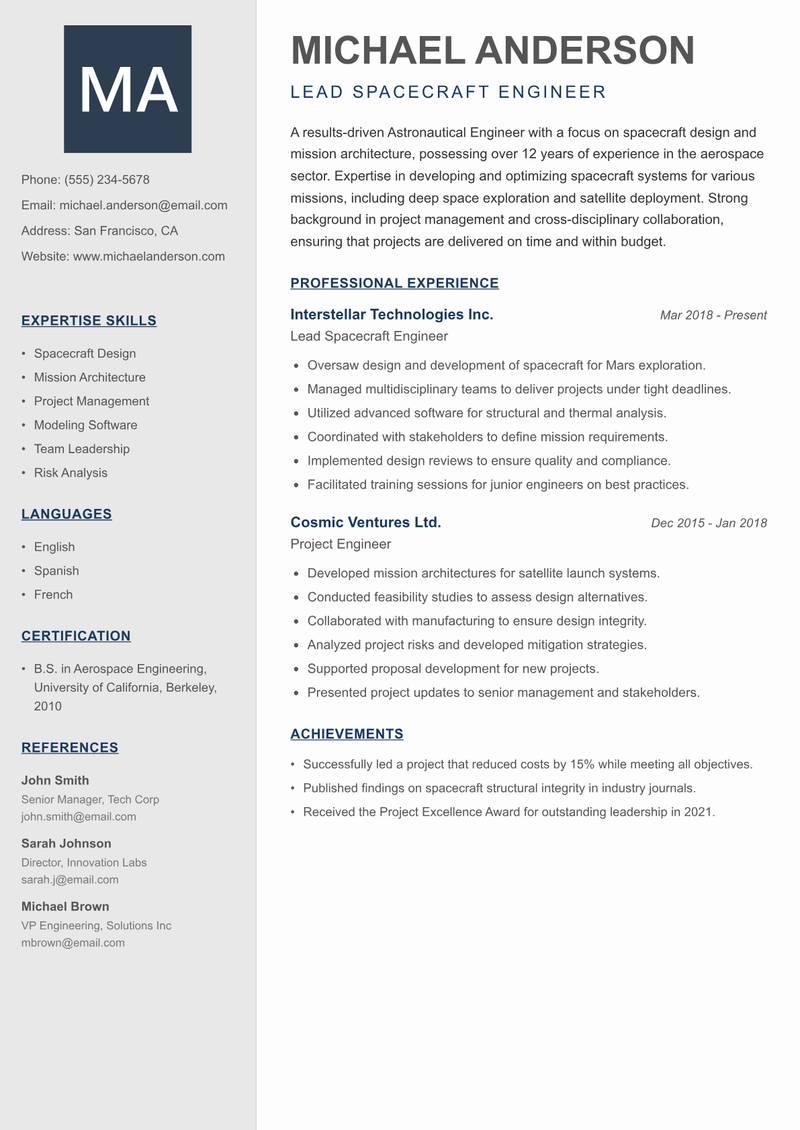
Lead Spacecraft Engineer Resume

A results-driven Astronautical Engineer with a focus on spacecraft design and mission architecture, possessing over 12 years of experience in the aerospace sector. Expertise in developing and optimizing spacecraft systems for various missions, including deep space exploration and satellite deployment. Strong background in project management and cross-disciplinary collaboration, ensuring that projects are delivered on time and within budget. Skilled in utilizing advanced modeling software to simulate spacecraft behavior and assess design feasibility. A proactive leader dedicated to mentoring engineering teams and fostering innovation. Holds a Bachelor’s degree in Aerospace Engineering and a certification in project management.

Spacecraft Design Mission Architecture Project Management Modeling Software Team Leadership Risk Analysis
  1. Oversaw design and development of spacecraft for Mars exploration.
  2. Managed multidisciplinary teams to deliver projects under tight deadlines.
  3. Utilized advanced software for structural and thermal analysis.
  4. Coordinated with stakeholders to define mission requirements.
  5. Implemented design reviews to ensure quality and compliance.
  6. Facilitated training sessions for junior engineers on best practices.
  1. Developed mission architectures for satellite launch systems.
  2. Conducted feasibility studies to assess design alternatives.
  3. Collaborated with manufacturing to ensure design integrity.
  4. Analyzed project risks and developed mitigation strategies.
  5. Supported proposal development for new projects.
  6. Presented project updates to senior management and stakeholders.

Achievements

  • Successfully led a project that reduced costs by 15% while meeting all objectives.
  • Published findings on spacecraft structural integrity in industry journals.
  • Received the Project Excellence Award for outstanding leadership in 2021.
⏱️
Experience
2-5 Years
📅
Level
Mid Level
🎓
Education
B.S. in Aerospace Engineering,...

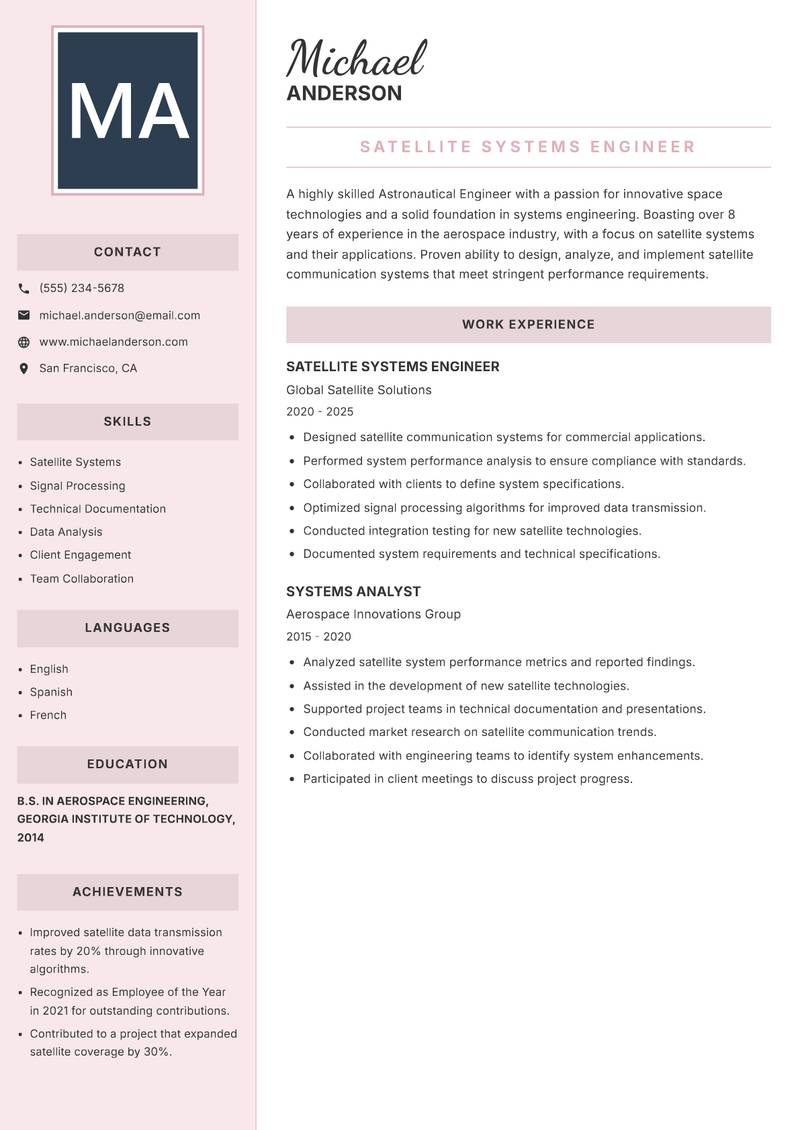
Satellite Systems Engineer Resume

A highly skilled Astronautical Engineer with a passion for innovative space technologies and a solid foundation in systems engineering. Boasting over 8 years of experience in the aerospace industry, with a focus on satellite systems and their applications. Proven ability to design, analyze, and implement satellite communication systems that meet stringent performance requirements. Strong analytical and problem-solving skills, combined with a commitment to advancing satellite technology for enhanced global connectivity. A collaborative team player, adept at working in fast-paced environments and engaging with clients to deliver tailored solutions. Holds a degree in Aerospace Engineering and is continuously pursuing professional development opportunities.

Satellite Systems Signal Processing Technical Documentation Data Analysis Client Engagement Team Collaboration
  1. Designed satellite communication systems for commercial applications.
  2. Performed system performance analysis to ensure compliance with standards.
  3. Collaborated with clients to define system specifications.
  4. Optimized signal processing algorithms for improved data transmission.
  5. Conducted integration testing for new satellite technologies.
  6. Documented system requirements and technical specifications.
  1. Analyzed satellite system performance metrics and reported findings.
  2. Assisted in the development of new satellite technologies.
  3. Supported project teams in technical documentation and presentations.
  4. Conducted market research on satellite communication trends.
  5. Collaborated with engineering teams to identify system enhancements.
  6. Participated in client meetings to discuss project progress.

Achievements

  • Improved satellite data transmission rates by 20% through innovative algorithms.
  • Recognized as Employee of the Year in 2021 for outstanding contributions.
  • Contributed to a project that expanded satellite coverage by 30%.
⏱️
Experience
2-5 Years
📅
Level
Mid Level
🎓
Education
B.S. in Aerospace Engineering,...

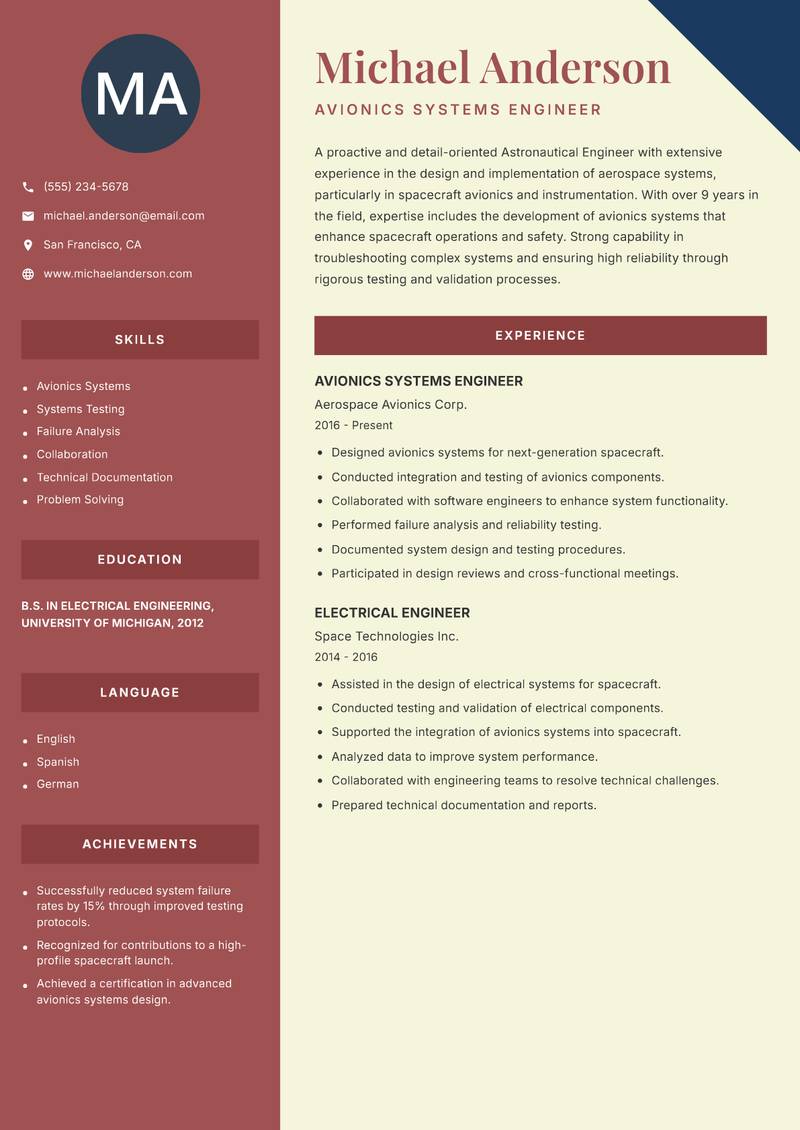
Avionics Systems Engineer Resume

A proactive and detail-oriented Astronautical Engineer with extensive experience in the design and implementation of aerospace systems, particularly in spacecraft avionics and instrumentation. With over 9 years in the field, expertise includes the development of avionics systems that enhance spacecraft operations and safety. Strong capability in troubleshooting complex systems and ensuring high reliability through rigorous testing and validation processes. Committed to continuous improvement and innovation, with a focus on integrating new technologies into existing systems. Recognized for exceptional teamwork and communication skills, facilitating collaboration across diverse engineering disciplines. Holds a degree in Electrical Engineering and is actively pursuing further specialization in aerospace systems.

Avionics Systems Systems Testing Failure Analysis Collaboration Technical Documentation Problem Solving
  1. Designed avionics systems for next-generation spacecraft.
  2. Conducted integration and testing of avionics components.
  3. Collaborated with software engineers to enhance system functionality.
  4. Performed failure analysis and reliability testing.
  5. Documented system design and testing procedures.
  6. Participated in design reviews and cross-functional meetings.
  1. Assisted in the design of electrical systems for spacecraft.
  2. Conducted testing and validation of electrical components.
  3. Supported the integration of avionics systems into spacecraft.
  4. Analyzed data to improve system performance.
  5. Collaborated with engineering teams to resolve technical challenges.
  6. Prepared technical documentation and reports.

Achievements

  • Successfully reduced system failure rates by 15% through improved testing protocols.
  • Recognized for contributions to a high-profile spacecraft launch.
  • Achieved a certification in advanced avionics systems design.
⏱️
Experience
2-5 Years
📅
Level
Mid Level
🎓
Education
B.S. in Electrical Engineering...

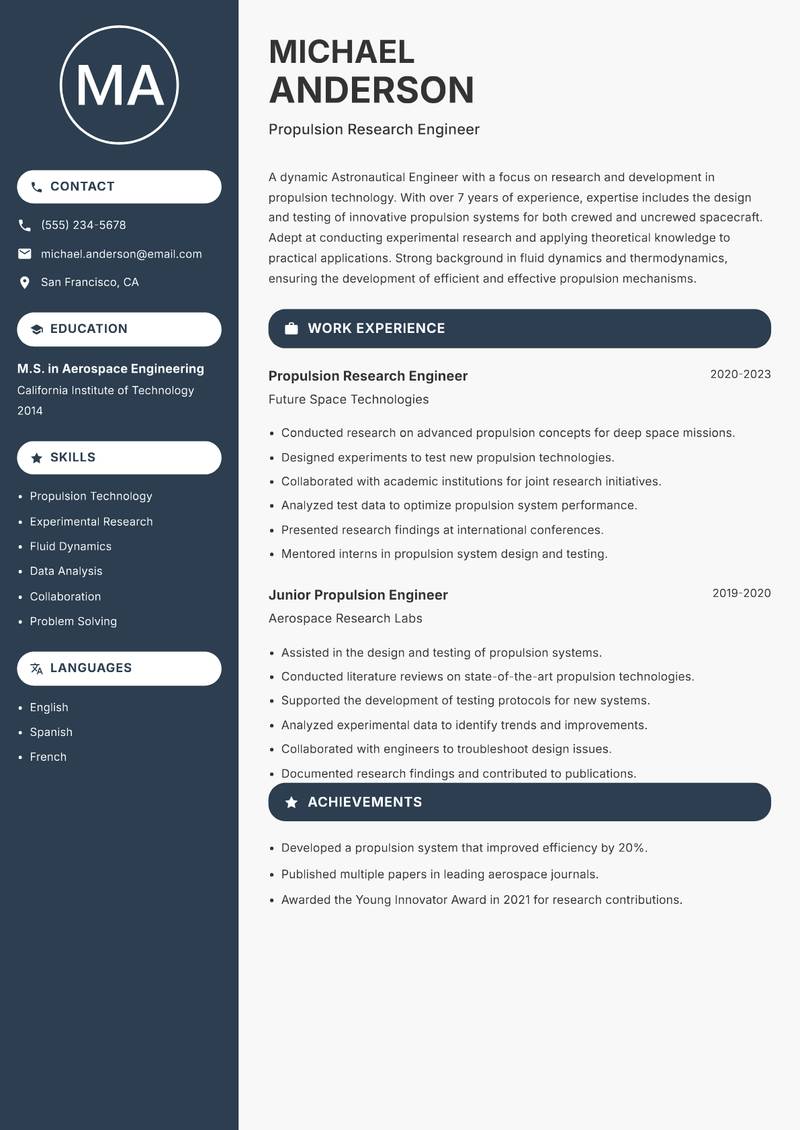
Propulsion Research Engineer Resume

A dynamic Astronautical Engineer with a focus on research and development in propulsion technology. With over 7 years of experience, expertise includes the design and testing of innovative propulsion systems for both crewed and uncrewed spacecraft. Adept at conducting experimental research and applying theoretical knowledge to practical applications. Strong background in fluid dynamics and thermodynamics, ensuring the development of efficient and effective propulsion mechanisms. Recognized for a hands-on approach to problem-solving and a commitment to advancing space exploration capabilities. Holds a Master's degree in Aerospace Engineering and has contributed to several high-impact research projects.

Propulsion Technology Experimental Research Fluid Dynamics Data Analysis Collaboration Problem Solving
  1. Conducted research on advanced propulsion concepts for deep space missions.
  2. Designed experiments to test new propulsion technologies.
  3. Collaborated with academic institutions for joint research initiatives.
  4. Analyzed test data to optimize propulsion system performance.
  5. Presented research findings at international conferences.
  6. Mentored interns in propulsion system design and testing.
  1. Assisted in the design and testing of propulsion systems.
  2. Conducted literature reviews on state-of-the-art propulsion technologies.
  3. Supported the development of testing protocols for new systems.
  4. Analyzed experimental data to identify trends and improvements.
  5. Collaborated with engineers to troubleshoot design issues.
  6. Documented research findings and contributed to publications.

Achievements

  • Developed a propulsion system that improved efficiency by 20%.
  • Published multiple papers in leading aerospace journals.
  • Awarded the Young Innovator Award in 2021 for research contributions.
⏱️
Experience
2-5 Years
📅
Level
Mid Level
🎓
Education
M.S. in Aerospace Engineering,...

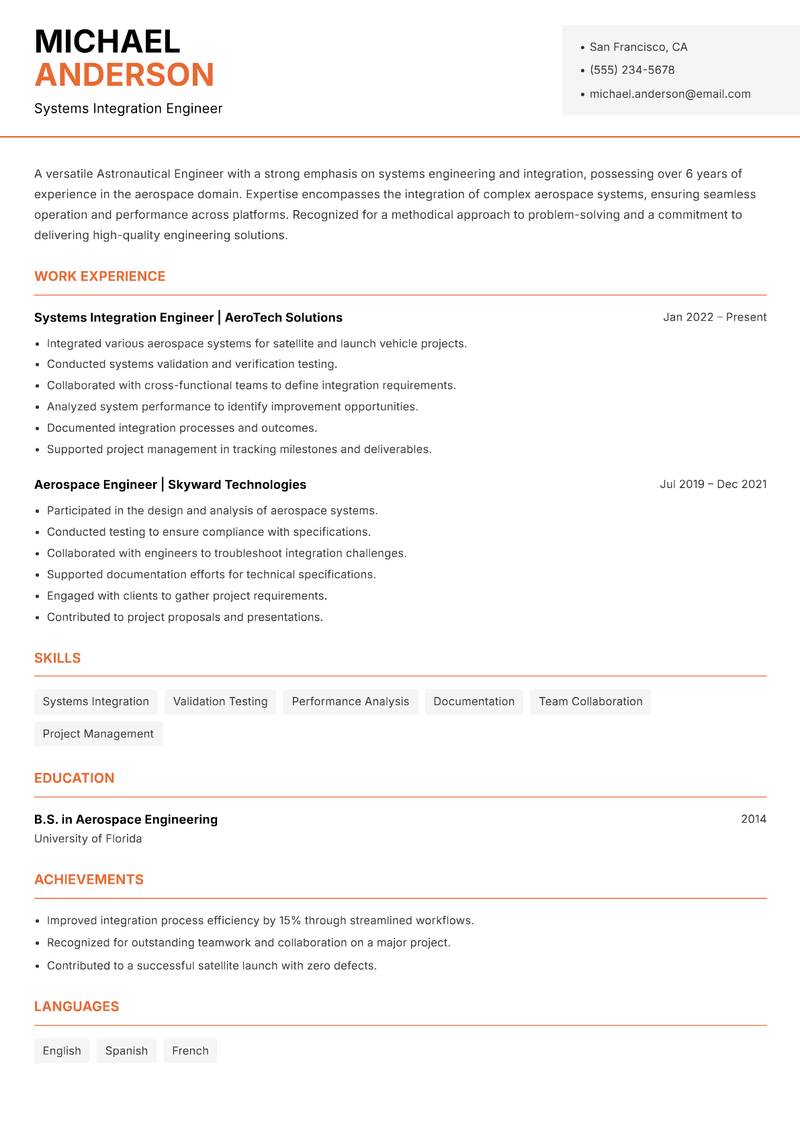
Systems Integration Engineer Resume

A versatile Astronautical Engineer with a strong emphasis on systems engineering and integration, possessing over 6 years of experience in the aerospace domain. Expertise encompasses the integration of complex aerospace systems, ensuring seamless operation and performance across platforms. Recognized for a methodical approach to problem-solving and a commitment to delivering high-quality engineering solutions. Proficient in systems modeling and simulation, with a focus on enhancing system capabilities and reducing operational risks. A dedicated team player who effectively collaborates with stakeholders to achieve project objectives. Holds a Bachelor’s degree in Aerospace Engineering and is committed to ongoing professional development.

Systems Integration Validation Testing Performance Analysis Documentation Team Collaboration Project Management
  1. Integrated various aerospace systems for satellite and launch vehicle projects.
  2. Conducted systems validation and verification testing.
  3. Collaborated with cross-functional teams to define integration requirements.
  4. Analyzed system performance to identify improvement opportunities.
  5. Documented integration processes and outcomes.
  6. Supported project management in tracking milestones and deliverables.
  1. Participated in the design and analysis of aerospace systems.
  2. Conducted testing to ensure compliance with specifications.
  3. Collaborated with engineers to troubleshoot integration challenges.
  4. Supported documentation efforts for technical specifications.
  5. Engaged with clients to gather project requirements.
  6. Contributed to project proposals and presentations.

Achievements

  • Improved integration process efficiency by 15% through streamlined workflows.
  • Recognized for outstanding teamwork and collaboration on a major project.
  • Contributed to a successful satellite launch with zero defects.
⏱️
Experience
2-5 Years
📅
Level
Mid Level
🎓
Education
B.S. in Aerospace Engineering,...

Key Skills for Astronautical Engineer Positions

Successful astronautical engineer professionals typically possess a combination of technical expertise, soft skills, and industry knowledge. Common skills include problem-solving abilities, attention to detail, communication skills, and proficiency in relevant tools and technologies specific to the role.

Typical Responsibilities

Astronautical Engineer roles often involve a range of responsibilities that may include project management, collaboration with cross-functional teams, meeting deadlines, maintaining quality standards, and contributing to organizational goals. Specific duties vary by company and seniority level.

Resume Tips for Astronautical Engineer Applications

ATS Optimization

Applicant Tracking Systems (ATS) scan resumes for keywords and formatting. To optimize your astronautical engineer resume for ATS:

Frequently Asked Questions

How do I customize this astronautical engineer resume template?

You can customize this resume template by replacing the placeholder content with your own information. Update the professional summary, work experience, education, and skills sections to match your background. Ensure all dates, company names, and achievements are accurate and relevant to your career history.

Is this astronautical engineer resume template ATS-friendly?

Yes, this resume template is designed to be ATS-friendly. It uses standard section headings, clear formatting, and avoids complex graphics or tables that can confuse applicant tracking systems. The structure follows best practices for ATS compatibility, making it easier for your resume to be parsed correctly by automated systems.

What is the ideal length for a astronautical engineer resume?

For most astronautical engineer positions, a one to two-page resume is ideal. Entry-level candidates should aim for one page, while experienced professionals with extensive work history may use two pages. Focus on the most relevant and recent experience, and ensure every section adds value to your application.

How should I format my astronautical engineer resume for best results?

Use a clean, professional format with consistent fonts and spacing. Include standard sections such as Contact Information, Professional Summary, Work Experience, Education, and Skills. Use bullet points for easy scanning, and ensure your contact information is clearly visible at the top. Save your resume as a PDF to preserve formatting across different devices and systems.

Can I use this template for different astronautical engineer job applications?

Yes, you can use this template as a base for multiple applications. However, it's recommended to tailor your resume for each specific job posting. Review the job description carefully and incorporate relevant keywords, skills, and experiences that match the requirements. Customizing your resume for each application increases your chances of passing ATS filters and catching the attention of hiring managers.

Scroll to view samples