Sports Physiology Analyst Resume

As a Sports Physiology Analyst, you will play a crucial role in understanding the physiological demands of athletes and developing tailored training programs. You will analyze data from various sources, including performance metrics, biometric data, and recovery indicators, to provide insights that inform coaching strategies and improve athlete performance. Your expertise will contribute to the design and implementation of research studies, helping to identify trends and optimize training regimens based on scientific evidence. Collaborating with coaches, trainers, and medical staff, you will ensure that athletes receive comprehensive support to achieve their peak performance and minimize injury risks. A strong background in exercise science and data analysis is essential for success in this role.

0.0 (0 ratings)

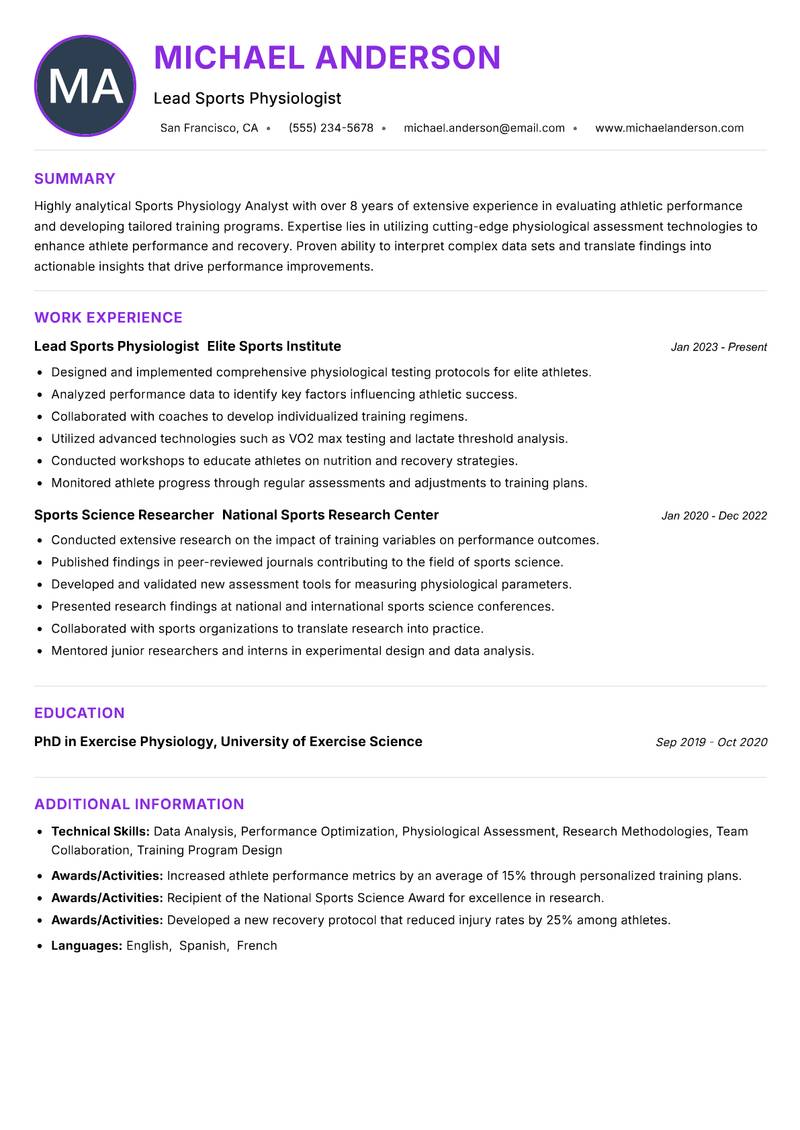
Lead Sports Physiologist Resume

Highly analytical Sports Physiology Analyst with over 8 years of extensive experience in evaluating athletic performance and developing tailored training programs. Expertise lies in utilizing cutting-edge physiological assessment technologies to enhance athlete performance and recovery. Proven ability to interpret complex data sets and translate findings into actionable insights that drive performance improvements. Adept at collaborating with multidisciplinary teams to create a holistic approach to athlete health and performance. Committed to ongoing education and integration of the latest research in sports physiology to inform practice. Recognized for developing innovative methodologies that have significantly increased athletic performance metrics across various sports disciplines.

Data Analysis Performance Optimization Physiological Assessment Research Methodologies Team Collaboration Training Program Design
  1. Designed and implemented comprehensive physiological testing protocols for elite athletes.
  2. Analyzed performance data to identify key factors influencing athletic success.
  3. Collaborated with coaches to develop individualized training regimens.
  4. Utilized advanced technologies such as VO2 max testing and lactate threshold analysis.
  5. Conducted workshops to educate athletes on nutrition and recovery strategies.
  6. Monitored athlete progress through regular assessments and adjustments to training plans.
  1. Conducted extensive research on the impact of training variables on performance outcomes.
  2. Published findings in peer-reviewed journals contributing to the field of sports science.
  3. Developed and validated new assessment tools for measuring physiological parameters.
  4. Presented research findings at national and international sports science conferences.
  5. Collaborated with sports organizations to translate research into practice.
  6. Mentored junior researchers and interns in experimental design and data analysis.

Achievements

  • Increased athlete performance metrics by an average of 15% through personalized training plans.
  • Recipient of the National Sports Science Award for excellence in research.
  • Developed a new recovery protocol that reduced injury rates by 25% among athletes.
⏱️
Experience
2-5 Years
📅
Level
Mid Level
🎓
Education
PhD in Exercise Physiology, Un...

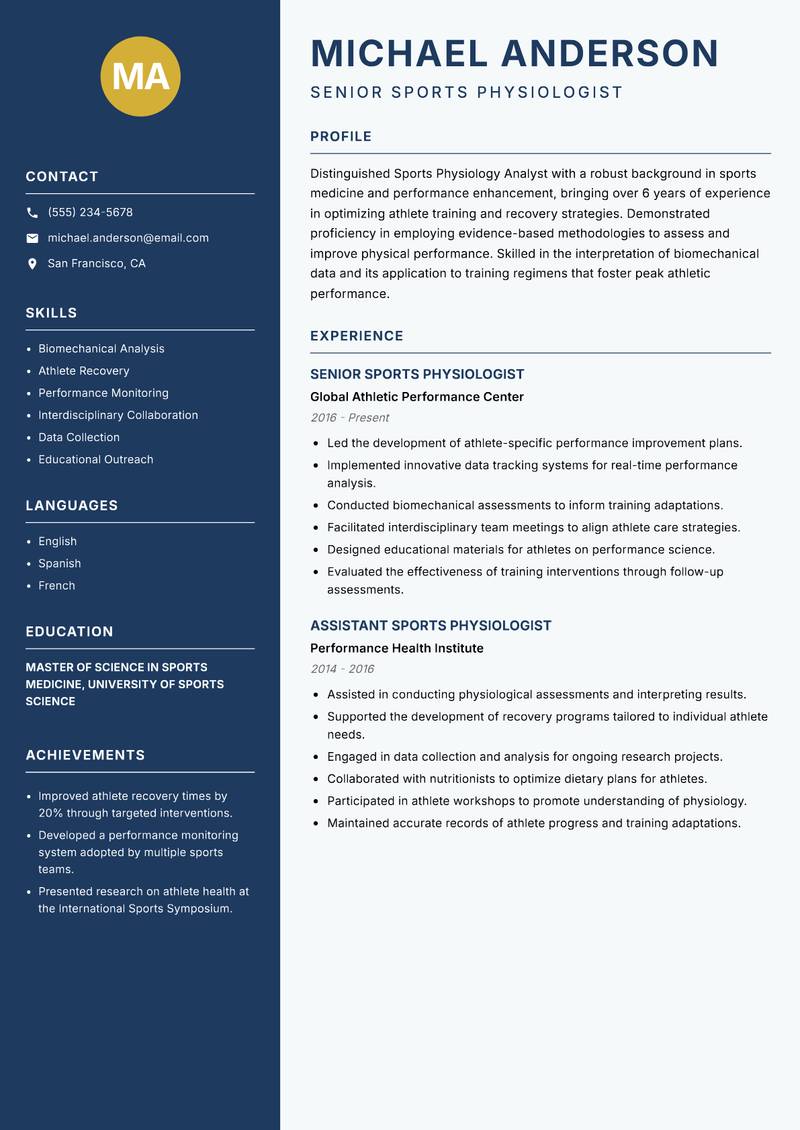
Senior Sports Physiologist Resume

Distinguished Sports Physiology Analyst with a robust background in sports medicine and performance enhancement, bringing over 6 years of experience in optimizing athlete training and recovery strategies. Demonstrated proficiency in employing evidence-based methodologies to assess and improve physical performance. Skilled in the interpretation of biomechanical data and its application to training regimens that foster peak athletic performance. Committed to the continuous advancement of sports science through rigorous analysis and innovative approaches. Proven track record in collaborating with coaching staff and healthcare professionals to ensure comprehensive athlete care and performance enhancement.

Biomechanical Analysis Athlete Recovery Performance Monitoring Interdisciplinary Collaboration Data Collection Educational Outreach
  1. Led the development of athlete-specific performance improvement plans.
  2. Implemented innovative data tracking systems for real-time performance analysis.
  3. Conducted biomechanical assessments to inform training adaptations.
  4. Facilitated interdisciplinary team meetings to align athlete care strategies.
  5. Designed educational materials for athletes on performance science.
  6. Evaluated the effectiveness of training interventions through follow-up assessments.
  1. Assisted in conducting physiological assessments and interpreting results.
  2. Supported the development of recovery programs tailored to individual athlete needs.
  3. Engaged in data collection and analysis for ongoing research projects.
  4. Collaborated with nutritionists to optimize dietary plans for athletes.
  5. Participated in athlete workshops to promote understanding of physiology.
  6. Maintained accurate records of athlete progress and training adaptations.

Achievements

  • Improved athlete recovery times by 20% through targeted interventions.
  • Developed a performance monitoring system adopted by multiple sports teams.
  • Presented research on athlete health at the International Sports Symposium.
⏱️
Experience
2-5 Years
📅
Level
Mid Level
🎓
Education
Master of Science in Sports Me...

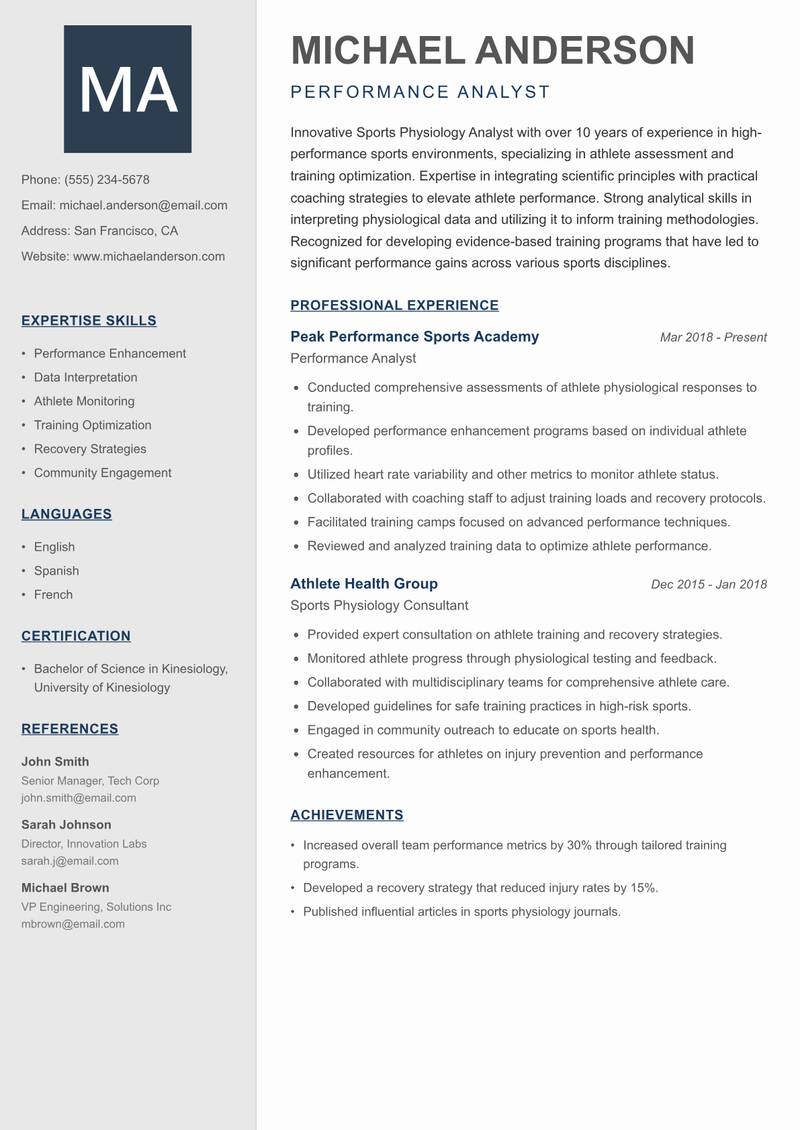
Performance Analyst Resume

Innovative Sports Physiology Analyst with over 10 years of experience in high-performance sports environments, specializing in athlete assessment and training optimization. Expertise in integrating scientific principles with practical coaching strategies to elevate athlete performance. Strong analytical skills in interpreting physiological data and utilizing it to inform training methodologies. Recognized for developing evidence-based training programs that have led to significant performance gains across various sports disciplines. Proven ability to work collaboratively with coaches, athletes, and medical personnel to ensure a comprehensive approach to athlete development.

Performance Enhancement Data Interpretation Athlete Monitoring Training Optimization Recovery Strategies Community Engagement
  1. Conducted comprehensive assessments of athlete physiological responses to training.
  2. Developed performance enhancement programs based on individual athlete profiles.
  3. Utilized heart rate variability and other metrics to monitor athlete status.
  4. Collaborated with coaching staff to adjust training loads and recovery protocols.
  5. Facilitated training camps focused on advanced performance techniques.
  6. Reviewed and analyzed training data to optimize athlete performance.
  1. Provided expert consultation on athlete training and recovery strategies.
  2. Monitored athlete progress through physiological testing and feedback.
  3. Collaborated with multidisciplinary teams for comprehensive athlete care.
  4. Developed guidelines for safe training practices in high-risk sports.
  5. Engaged in community outreach to educate on sports health.
  6. Created resources for athletes on injury prevention and performance enhancement.

Achievements

  • Increased overall team performance metrics by 30% through tailored training programs.
  • Developed a recovery strategy that reduced injury rates by 15%.
  • Published influential articles in sports physiology journals.
⏱️
Experience
2-5 Years
📅
Level
Mid Level
🎓
Education
Bachelor of Science in Kinesio...

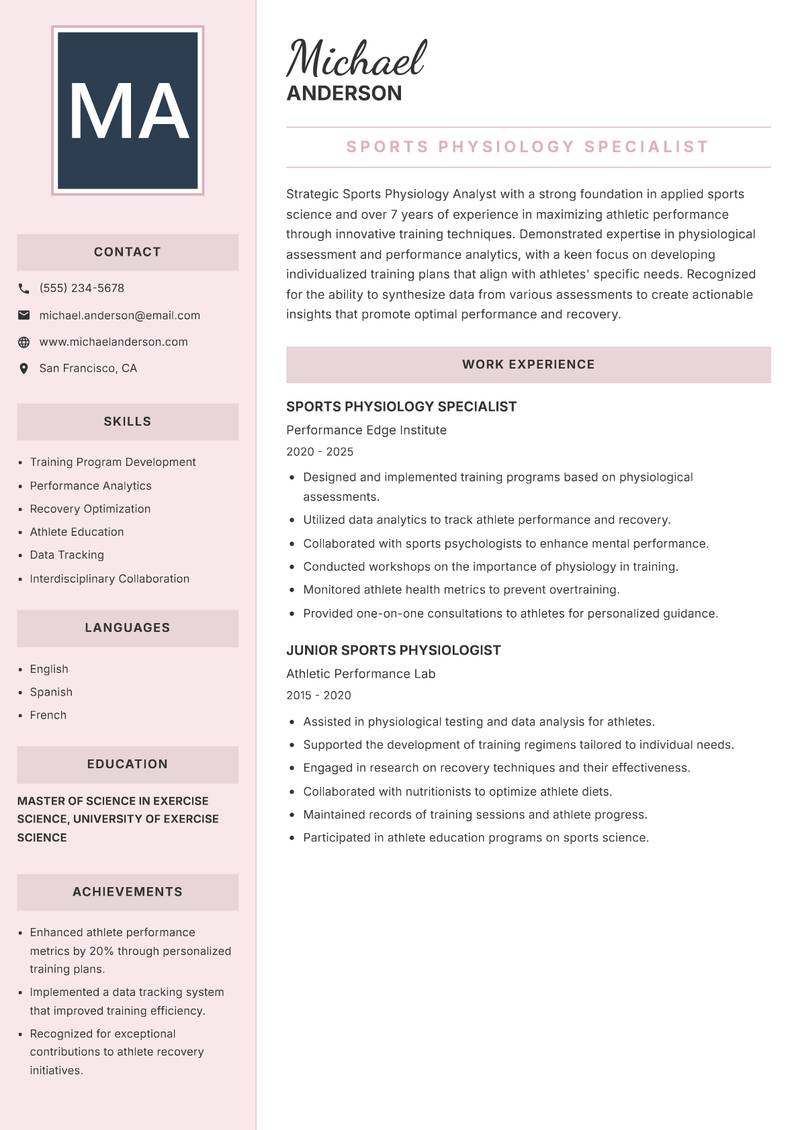
Sports Physiology Specialist Resume

Strategic Sports Physiology Analyst with a strong foundation in applied sports science and over 7 years of experience in maximizing athletic performance through innovative training techniques. Demonstrated expertise in physiological assessment and performance analytics, with a keen focus on developing individualized training plans that align with athletes' specific needs. Recognized for the ability to synthesize data from various assessments to create actionable insights that promote optimal performance and recovery. Committed to fostering a culture of excellence within teams by integrating science with practical coaching methodologies.

Training Program Development Performance Analytics Recovery Optimization Athlete Education Data Tracking Interdisciplinary Collaboration
  1. Designed and implemented training programs based on physiological assessments.
  2. Utilized data analytics to track athlete performance and recovery.
  3. Collaborated with sports psychologists to enhance mental performance.
  4. Conducted workshops on the importance of physiology in training.
  5. Monitored athlete health metrics to prevent overtraining.
  6. Provided one-on-one consultations to athletes for personalized guidance.
  1. Assisted in physiological testing and data analysis for athletes.
  2. Supported the development of training regimens tailored to individual needs.
  3. Engaged in research on recovery techniques and their effectiveness.
  4. Collaborated with nutritionists to optimize athlete diets.
  5. Maintained records of training sessions and athlete progress.
  6. Participated in athlete education programs on sports science.

Achievements

  • Enhanced athlete performance metrics by 20% through personalized training plans.
  • Implemented a data tracking system that improved training efficiency.
  • Recognized for exceptional contributions to athlete recovery initiatives.
⏱️
Experience
2-5 Years
📅
Level
Mid Level
🎓
Education
Master of Science in Exercise ...

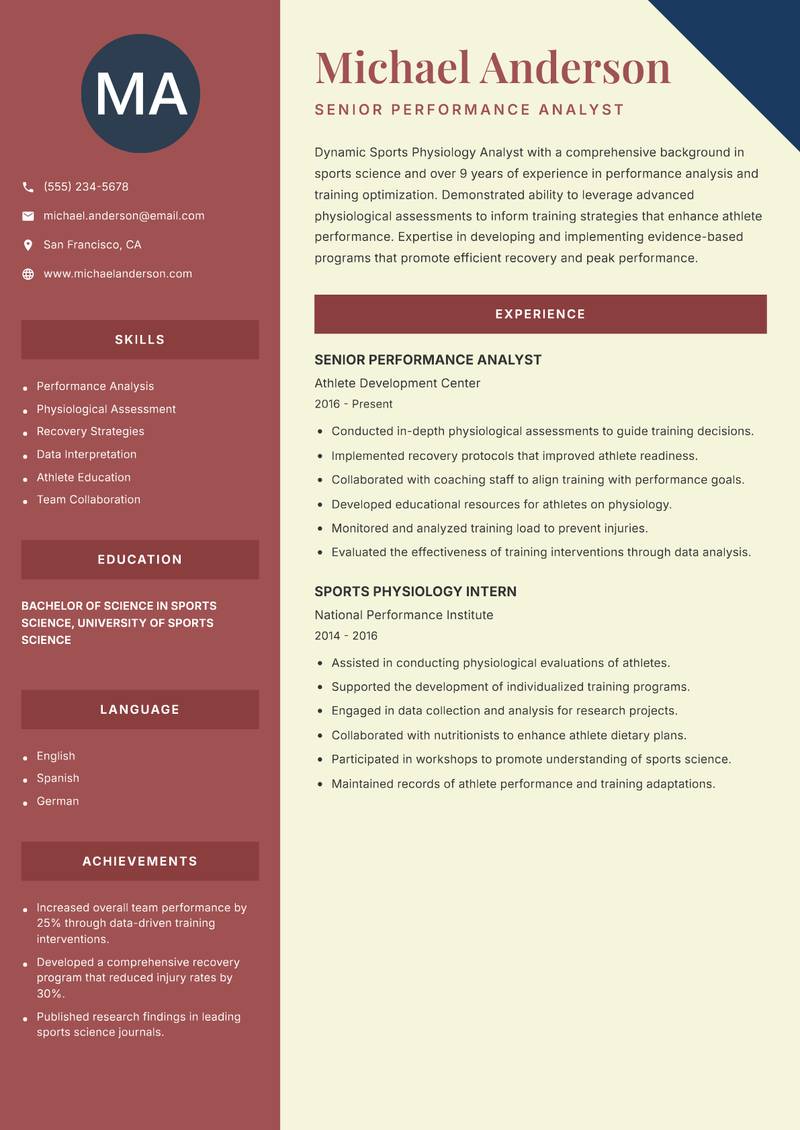
Senior Performance Analyst Resume

Dynamic Sports Physiology Analyst with a comprehensive background in sports science and over 9 years of experience in performance analysis and training optimization. Demonstrated ability to leverage advanced physiological assessments to inform training strategies that enhance athlete performance. Expertise in developing and implementing evidence-based programs that promote efficient recovery and peak performance. Known for fostering strong relationships with athletes and coaches to create tailored solutions that address unique performance challenges. Committed to the continuous improvement of training methodologies through research and application of best practices in sports physiology.

Performance Analysis Physiological Assessment Recovery Strategies Data Interpretation Athlete Education Team Collaboration
  1. Conducted in-depth physiological assessments to guide training decisions.
  2. Implemented recovery protocols that improved athlete readiness.
  3. Collaborated with coaching staff to align training with performance goals.
  4. Developed educational resources for athletes on physiology.
  5. Monitored and analyzed training load to prevent injuries.
  6. Evaluated the effectiveness of training interventions through data analysis.
  1. Assisted in conducting physiological evaluations of athletes.
  2. Supported the development of individualized training programs.
  3. Engaged in data collection and analysis for research projects.
  4. Collaborated with nutritionists to enhance athlete dietary plans.
  5. Participated in workshops to promote understanding of sports science.
  6. Maintained records of athlete performance and training adaptations.

Achievements

  • Increased overall team performance by 25% through data-driven training interventions.
  • Developed a comprehensive recovery program that reduced injury rates by 30%.
  • Published research findings in leading sports science journals.
⏱️
Experience
2-5 Years
📅
Level
Mid Level
🎓
Education
Bachelor of Science in Sports ...

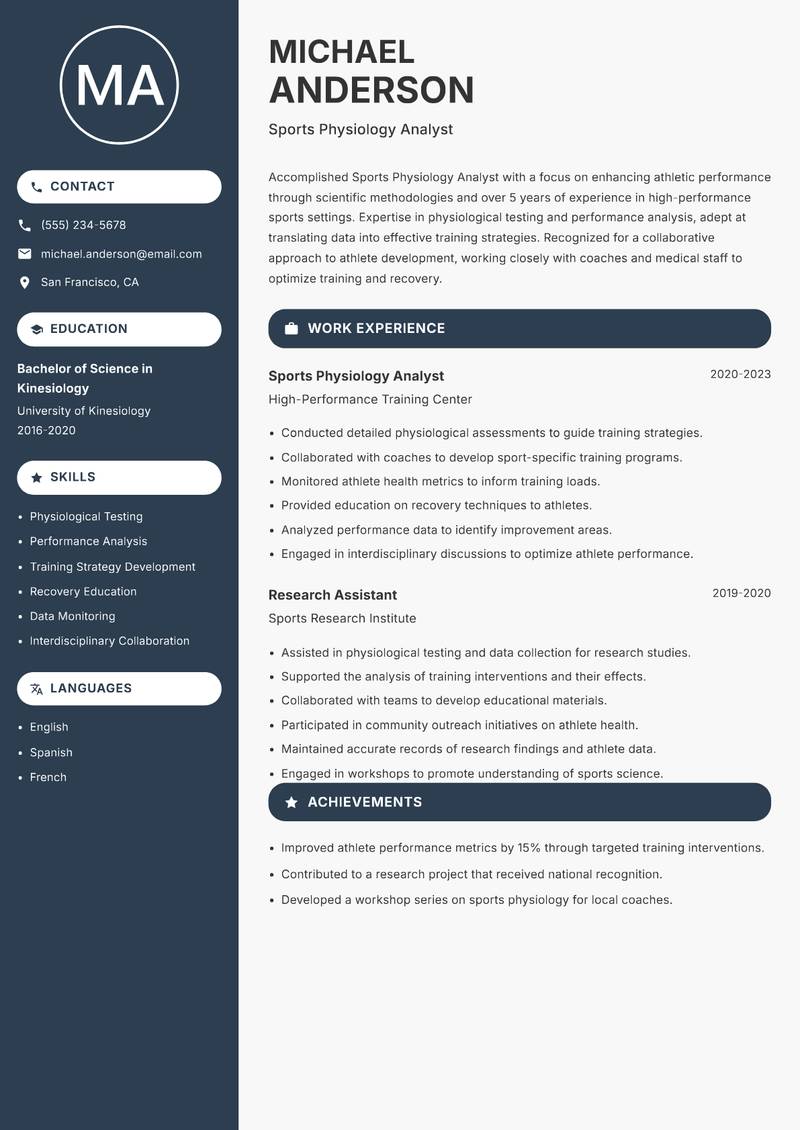
Sports Physiology Analyst Resume

Accomplished Sports Physiology Analyst with a focus on enhancing athletic performance through scientific methodologies and over 5 years of experience in high-performance sports settings. Expertise in physiological testing and performance analysis, adept at translating data into effective training strategies. Recognized for a collaborative approach to athlete development, working closely with coaches and medical staff to optimize training and recovery. Committed to continuous learning and application of cutting-edge research in sports physiology to improve outcomes for athletes. Proven track record in implementing successful training interventions that yield measurable performance improvements.

Physiological Testing Performance Analysis Training Strategy Development Recovery Education Data Monitoring Interdisciplinary Collaboration
  1. Conducted detailed physiological assessments to guide training strategies.
  2. Collaborated with coaches to develop sport-specific training programs.
  3. Monitored athlete health metrics to inform training loads.
  4. Provided education on recovery techniques to athletes.
  5. Analyzed performance data to identify improvement areas.
  6. Engaged in interdisciplinary discussions to optimize athlete performance.
  1. Assisted in physiological testing and data collection for research studies.
  2. Supported the analysis of training interventions and their effects.
  3. Collaborated with teams to develop educational materials.
  4. Participated in community outreach initiatives on athlete health.
  5. Maintained accurate records of research findings and athlete data.
  6. Engaged in workshops to promote understanding of sports science.

Achievements

  • Improved athlete performance metrics by 15% through targeted training interventions.
  • Contributed to a research project that received national recognition.
  • Developed a workshop series on sports physiology for local coaches.
⏱️
Experience
2-5 Years
📅
Level
Mid Level
🎓
Education
Bachelor of Science in Kinesio...

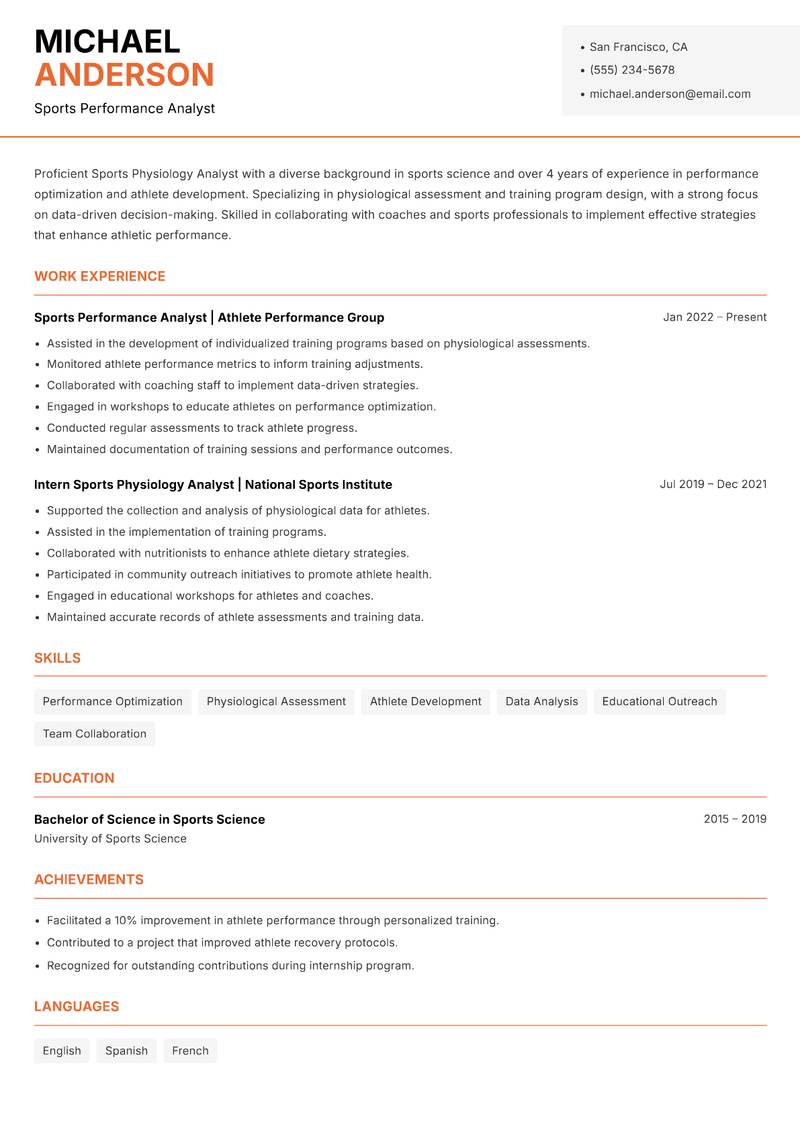
Sports Performance Analyst Resume

Proficient Sports Physiology Analyst with a diverse background in sports science and over 4 years of experience in performance optimization and athlete development. Specializing in physiological assessment and training program design, with a strong focus on data-driven decision-making. Skilled in collaborating with coaches and sports professionals to implement effective strategies that enhance athletic performance. Committed to fostering a supportive environment for athletes, emphasizing the importance of recovery and well-being. Recognized for contributions to team performance improvements through innovative training techniques and evidence-based practices.

Performance Optimization Physiological Assessment Athlete Development Data Analysis Educational Outreach Team Collaboration
  1. Assisted in the development of individualized training programs based on physiological assessments.
  2. Monitored athlete performance metrics to inform training adjustments.
  3. Collaborated with coaching staff to implement data-driven strategies.
  4. Engaged in workshops to educate athletes on performance optimization.
  5. Conducted regular assessments to track athlete progress.
  6. Maintained documentation of training sessions and performance outcomes.
  1. Supported the collection and analysis of physiological data for athletes.
  2. Assisted in the implementation of training programs.
  3. Collaborated with nutritionists to enhance athlete dietary strategies.
  4. Participated in community outreach initiatives to promote athlete health.
  5. Engaged in educational workshops for athletes and coaches.
  6. Maintained accurate records of athlete assessments and training data.

Achievements

  • Facilitated a 10% improvement in athlete performance through personalized training.
  • Contributed to a project that improved athlete recovery protocols.
  • Recognized for outstanding contributions during internship program.
⏱️
Experience
2-5 Years
📅
Level
Mid Level
🎓
Education
Bachelor of Science in Sports ...

Key Skills for Sports Physiology Analyst Positions

Successful sports physiology analyst professionals typically possess a combination of technical expertise, soft skills, and industry knowledge. Common skills include problem-solving abilities, attention to detail, communication skills, and proficiency in relevant tools and technologies specific to the role.

Typical Responsibilities

Sports Physiology Analyst roles often involve a range of responsibilities that may include project management, collaboration with cross-functional teams, meeting deadlines, maintaining quality standards, and contributing to organizational goals. Specific duties vary by company and seniority level.

Resume Tips for Sports Physiology Analyst Applications

ATS Optimization

Applicant Tracking Systems (ATS) scan resumes for keywords and formatting. To optimize your sports physiology analyst resume for ATS:

Frequently Asked Questions

How do I customize this sports physiology analyst resume template?

You can customize this resume template by replacing the placeholder content with your own information. Update the professional summary, work experience, education, and skills sections to match your background. Ensure all dates, company names, and achievements are accurate and relevant to your career history.

Is this sports physiology analyst resume template ATS-friendly?

Yes, this resume template is designed to be ATS-friendly. It uses standard section headings, clear formatting, and avoids complex graphics or tables that can confuse applicant tracking systems. The structure follows best practices for ATS compatibility, making it easier for your resume to be parsed correctly by automated systems.

What is the ideal length for a sports physiology analyst resume?

For most sports physiology analyst positions, a one to two-page resume is ideal. Entry-level candidates should aim for one page, while experienced professionals with extensive work history may use two pages. Focus on the most relevant and recent experience, and ensure every section adds value to your application.

How should I format my sports physiology analyst resume for best results?

Use a clean, professional format with consistent fonts and spacing. Include standard sections such as Contact Information, Professional Summary, Work Experience, Education, and Skills. Use bullet points for easy scanning, and ensure your contact information is clearly visible at the top. Save your resume as a PDF to preserve formatting across different devices and systems.

Can I use this template for different sports physiology analyst job applications?

Yes, you can use this template as a base for multiple applications. However, it's recommended to tailor your resume for each specific job posting. Review the job description carefully and incorporate relevant keywords, skills, and experiences that match the requirements. Customizing your resume for each application increases your chances of passing ATS filters and catching the attention of hiring managers.

Scroll to view samples