Fish Population Biologist Resume

As a Fish Population Biologist, you will play a crucial role in understanding the dynamics of fish populations and their habitats. Your work will involve collecting and analyzing data on fish stocks, assessing environmental impacts, and developing management strategies to ensure sustainable fisheries. Collaborating with other scientists, stakeholders, and regulatory agencies, you will contribute to conservation efforts aimed at preserving aquatic ecosystems. In this position, you will utilize advanced statistical models and field research techniques to evaluate population trends and health indicators. Your findings will help inform policy decisions and guide effective management practices. Additionally, you will have opportunities to publish your research in scientific journals and present your work at conferences, enhancing the knowledge base for fishery management and conservation.

0.0 (0 ratings)

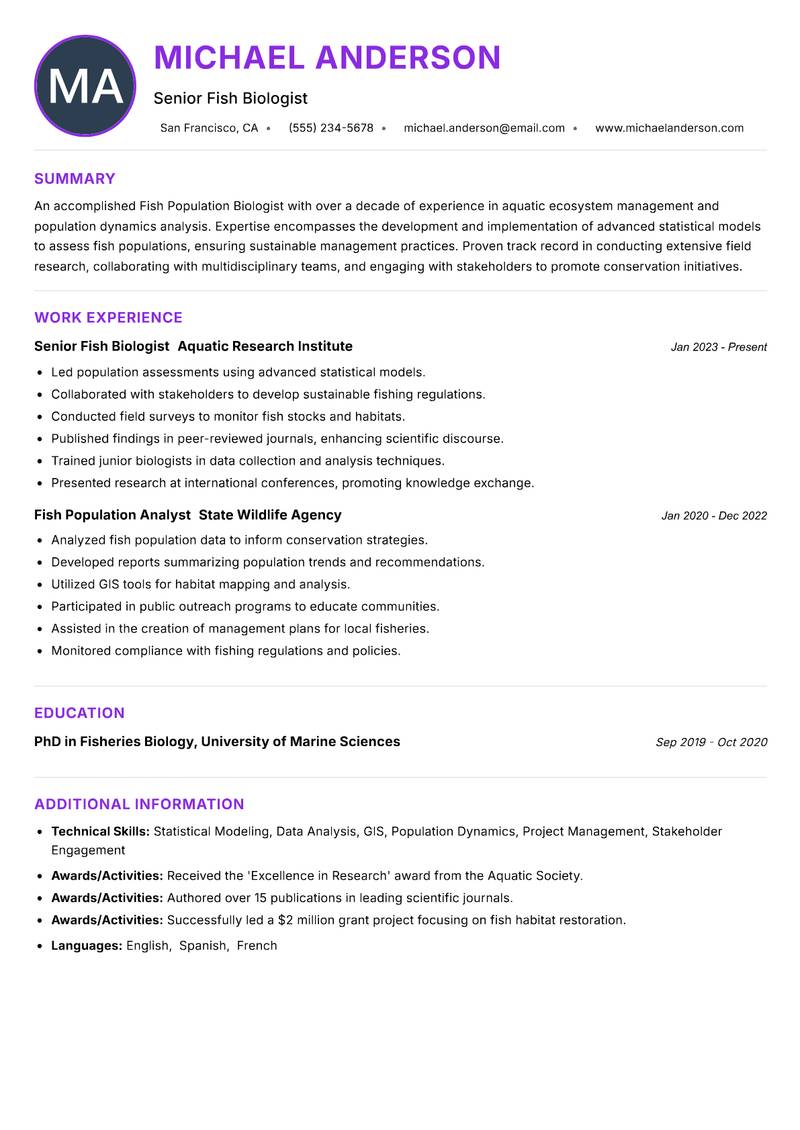
Senior Fish Biologist Resume

An accomplished Fish Population Biologist with over a decade of experience in aquatic ecosystem management and population dynamics analysis. Expertise encompasses the development and implementation of advanced statistical models to assess fish populations, ensuring sustainable management practices. Proven track record in conducting extensive field research, collaborating with multidisciplinary teams, and engaging with stakeholders to promote conservation initiatives. Demonstrated ability to synthesize complex data into actionable insights, fostering informed decision-making in fisheries management. Highly skilled in utilizing various software tools for data analysis and visualization, alongside a strong understanding of regulatory frameworks governing aquatic resources. Committed to advancing scientific knowledge and advocating for the preservation of aquatic biodiversity through innovative research methodologies and community engagement.

Statistical Modeling Data Analysis GIS Population Dynamics Project Management Stakeholder Engagement
  1. Led population assessments using advanced statistical models.
  2. Collaborated with stakeholders to develop sustainable fishing regulations.
  3. Conducted field surveys to monitor fish stocks and habitats.
  4. Published findings in peer-reviewed journals, enhancing scientific discourse.
  5. Trained junior biologists in data collection and analysis techniques.
  6. Presented research at international conferences, promoting knowledge exchange.
  1. Analyzed fish population data to inform conservation strategies.
  2. Developed reports summarizing population trends and recommendations.
  3. Utilized GIS tools for habitat mapping and analysis.
  4. Participated in public outreach programs to educate communities.
  5. Assisted in the creation of management plans for local fisheries.
  6. Monitored compliance with fishing regulations and policies.

Achievements

  • Received the 'Excellence in Research' award from the Aquatic Society.
  • Authored over 15 publications in leading scientific journals.
  • Successfully led a $2 million grant project focusing on fish habitat restoration.
⏱️
Experience
2-5 Years
📅
Level
Mid Level
🎓
Education
PhD in Fisheries Biology, Univ...

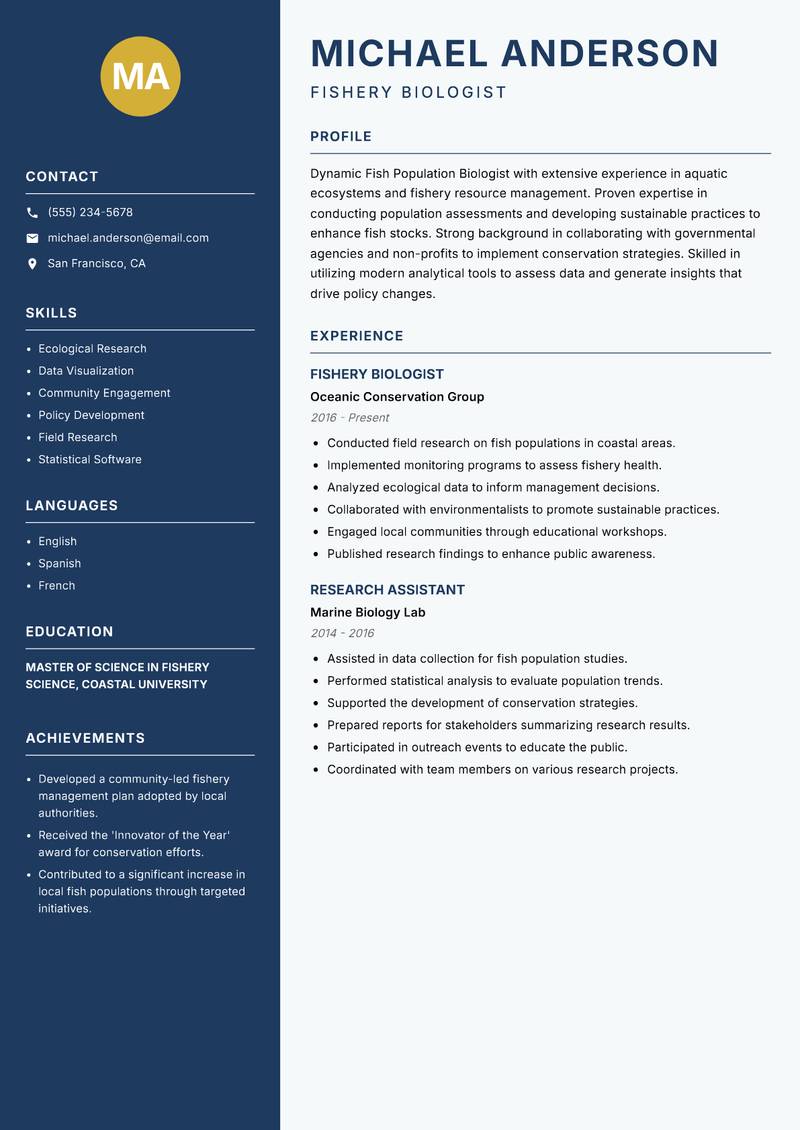
Fishery Biologist Resume

Dynamic Fish Population Biologist with extensive experience in aquatic ecosystems and fishery resource management. Proven expertise in conducting population assessments and developing sustainable practices to enhance fish stocks. Strong background in collaborating with governmental agencies and non-profits to implement conservation strategies. Skilled in utilizing modern analytical tools to assess data and generate insights that drive policy changes. Demonstrates a commitment to public education and stakeholder engagement, ensuring that research findings are translated into effective conservation initiatives. Recognized for innovative approaches to problem-solving and ability to work effectively in interdisciplinary teams.

Ecological Research Data Visualization Community Engagement Policy Development Field Research Statistical Software
  1. Conducted field research on fish populations in coastal areas.
  2. Implemented monitoring programs to assess fishery health.
  3. Analyzed ecological data to inform management decisions.
  4. Collaborated with environmentalists to promote sustainable practices.
  5. Engaged local communities through educational workshops.
  6. Published research findings to enhance public awareness.
  1. Assisted in data collection for fish population studies.
  2. Performed statistical analysis to evaluate population trends.
  3. Supported the development of conservation strategies.
  4. Prepared reports for stakeholders summarizing research results.
  5. Participated in outreach events to educate the public.
  6. Coordinated with team members on various research projects.

Achievements

  • Developed a community-led fishery management plan adopted by local authorities.
  • Received the 'Innovator of the Year' award for conservation efforts.
  • Contributed to a significant increase in local fish populations through targeted initiatives.
⏱️
Experience
2-5 Years
📅
Level
Mid Level
🎓
Education
Master of Science in Fishery S...

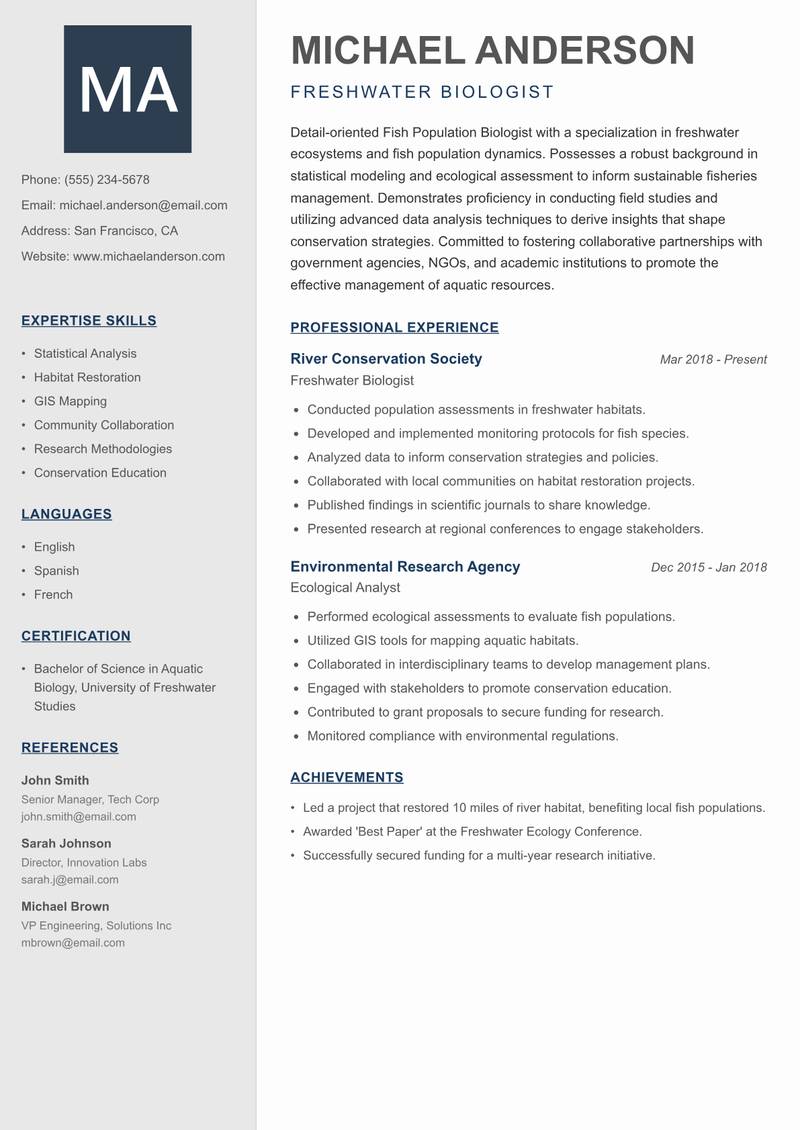
Freshwater Biologist Resume

Detail-oriented Fish Population Biologist with a specialization in freshwater ecosystems and fish population dynamics. Possesses a robust background in statistical modeling and ecological assessment to inform sustainable fisheries management. Demonstrates proficiency in conducting field studies and utilizing advanced data analysis techniques to derive insights that shape conservation strategies. Committed to fostering collaborative partnerships with government agencies, NGOs, and academic institutions to promote the effective management of aquatic resources. Adept at communicating complex scientific findings to diverse audiences, ensuring stakeholder buy-in for conservation initiatives. Recognized for a proactive approach to problem-solving and dedication to advancing the field of fisheries biology.

Statistical Analysis Habitat Restoration GIS Mapping Community Collaboration Research Methodologies Conservation Education
  1. Conducted population assessments in freshwater habitats.
  2. Developed and implemented monitoring protocols for fish species.
  3. Analyzed data to inform conservation strategies and policies.
  4. Collaborated with local communities on habitat restoration projects.
  5. Published findings in scientific journals to share knowledge.
  6. Presented research at regional conferences to engage stakeholders.
  1. Performed ecological assessments to evaluate fish populations.
  2. Utilized GIS tools for mapping aquatic habitats.
  3. Collaborated in interdisciplinary teams to develop management plans.
  4. Engaged with stakeholders to promote conservation education.
  5. Contributed to grant proposals to secure funding for research.
  6. Monitored compliance with environmental regulations.

Achievements

  • Led a project that restored 10 miles of river habitat, benefiting local fish populations.
  • Awarded 'Best Paper' at the Freshwater Ecology Conference.
  • Successfully secured funding for a multi-year research initiative.
⏱️
Experience
2-5 Years
📅
Level
Mid Level
🎓
Education
Bachelor of Science in Aquatic...

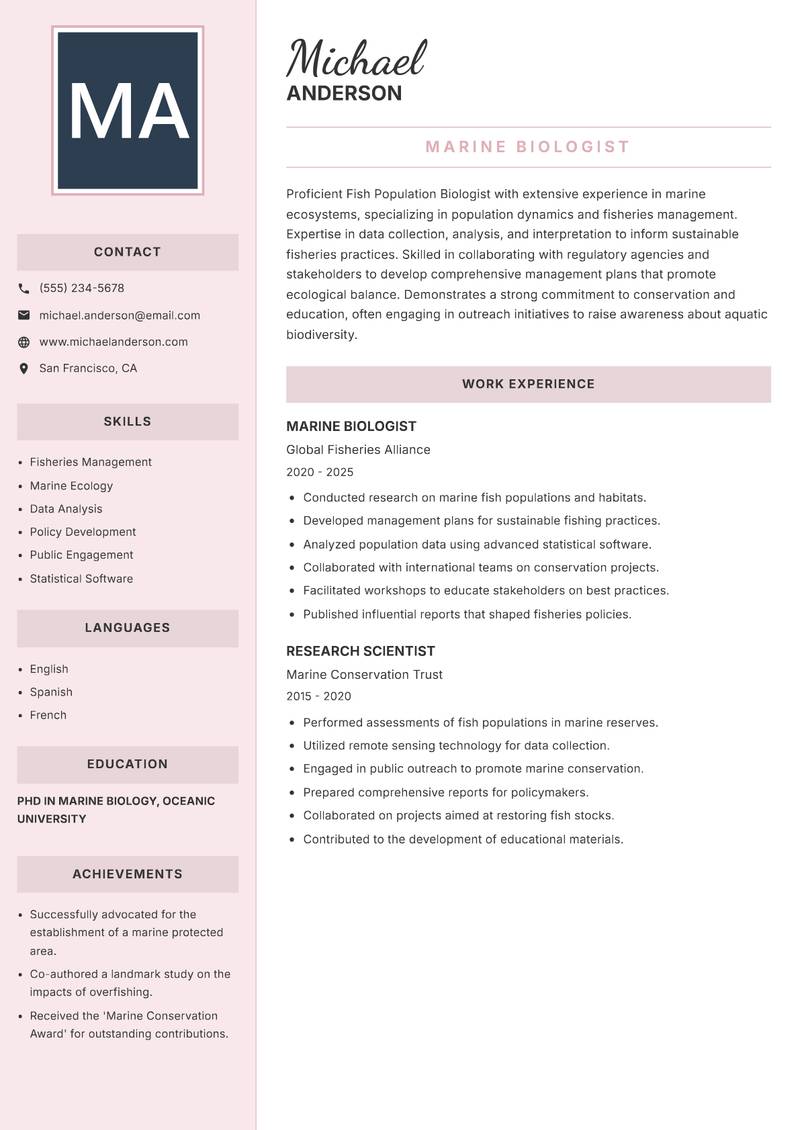
Marine Biologist Resume

Proficient Fish Population Biologist with extensive experience in marine ecosystems, specializing in population dynamics and fisheries management. Expertise in data collection, analysis, and interpretation to inform sustainable fisheries practices. Skilled in collaborating with regulatory agencies and stakeholders to develop comprehensive management plans that promote ecological balance. Demonstrates a strong commitment to conservation and education, often engaging in outreach initiatives to raise awareness about aquatic biodiversity. Adept in using modern technologies and statistical tools to enhance research methodologies. Recognized for contributions to significant policy changes in fishery management through rigorous scientific research.

Fisheries Management Marine Ecology Data Analysis Policy Development Public Engagement Statistical Software
  1. Conducted research on marine fish populations and habitats.
  2. Developed management plans for sustainable fishing practices.
  3. Analyzed population data using advanced statistical software.
  4. Collaborated with international teams on conservation projects.
  5. Facilitated workshops to educate stakeholders on best practices.
  6. Published influential reports that shaped fisheries policies.
  1. Performed assessments of fish populations in marine reserves.
  2. Utilized remote sensing technology for data collection.
  3. Engaged in public outreach to promote marine conservation.
  4. Prepared comprehensive reports for policymakers.
  5. Collaborated on projects aimed at restoring fish stocks.
  6. Contributed to the development of educational materials.

Achievements

  • Successfully advocated for the establishment of a marine protected area.
  • Co-authored a landmark study on the impacts of overfishing.
  • Received the 'Marine Conservation Award' for outstanding contributions.
⏱️
Experience
2-5 Years
📅
Level
Mid Level
🎓
Education
PhD in Marine Biology, Oceanic...

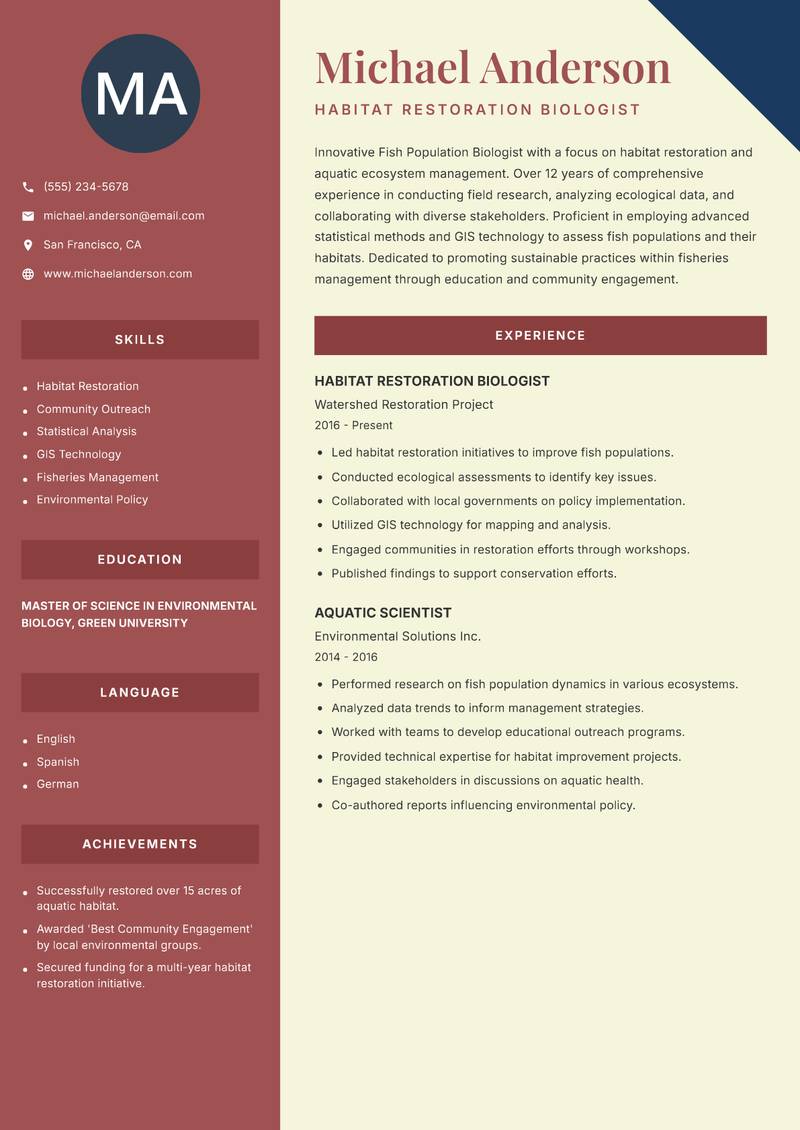
Habitat Restoration Biologist Resume

Innovative Fish Population Biologist with a focus on habitat restoration and aquatic ecosystem management. Over 12 years of comprehensive experience in conducting field research, analyzing ecological data, and collaborating with diverse stakeholders. Proficient in employing advanced statistical methods and GIS technology to assess fish populations and their habitats. Dedicated to promoting sustainable practices within fisheries management through education and community engagement. Known for developing effective outreach programs that foster public awareness of aquatic conservation issues. Holds a strong commitment to scientific integrity and continuous professional development in the field of fisheries biology.

Habitat Restoration Community Outreach Statistical Analysis GIS Technology Fisheries Management Environmental Policy
  1. Led habitat restoration initiatives to improve fish populations.
  2. Conducted ecological assessments to identify key issues.
  3. Collaborated with local governments on policy implementation.
  4. Utilized GIS technology for mapping and analysis.
  5. Engaged communities in restoration efforts through workshops.
  6. Published findings to support conservation efforts.
  1. Performed research on fish population dynamics in various ecosystems.
  2. Analyzed data trends to inform management strategies.
  3. Worked with teams to develop educational outreach programs.
  4. Provided technical expertise for habitat improvement projects.
  5. Engaged stakeholders in discussions on aquatic health.
  6. Co-authored reports influencing environmental policy.

Achievements

  • Successfully restored over 15 acres of aquatic habitat.
  • Awarded 'Best Community Engagement' by local environmental groups.
  • Secured funding for a multi-year habitat restoration initiative.
⏱️
Experience
2-5 Years
📅
Level
Mid Level
🎓
Education
Master of Science in Environme...

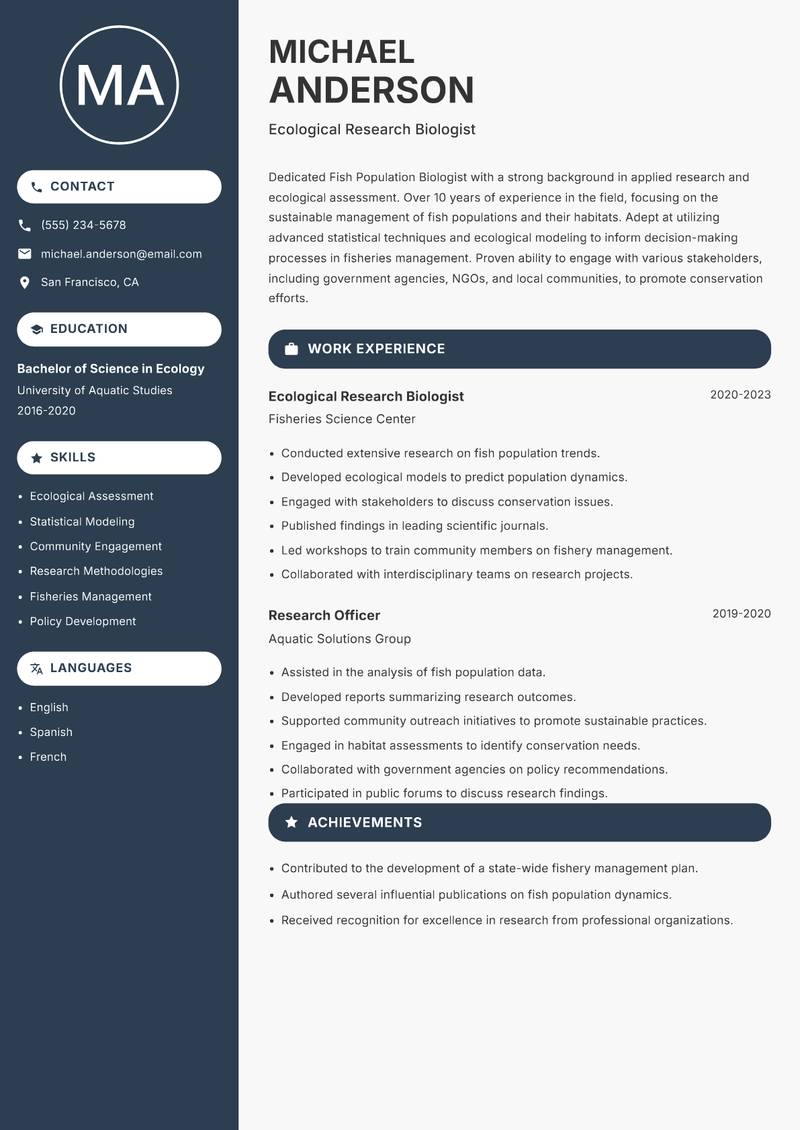
Ecological Research Biologist Resume

Dedicated Fish Population Biologist with a strong background in applied research and ecological assessment. Over 10 years of experience in the field, focusing on the sustainable management of fish populations and their habitats. Adept at utilizing advanced statistical techniques and ecological modeling to inform decision-making processes in fisheries management. Proven ability to engage with various stakeholders, including government agencies, NGOs, and local communities, to promote conservation efforts. Committed to enhancing public awareness and understanding of aquatic ecosystems through educational programs and outreach activities. Recognized for contributions to research that informs policy and conservation strategies.

Ecological Assessment Statistical Modeling Community Engagement Research Methodologies Fisheries Management Policy Development
  1. Conducted extensive research on fish population trends.
  2. Developed ecological models to predict population dynamics.
  3. Engaged with stakeholders to discuss conservation issues.
  4. Published findings in leading scientific journals.
  5. Led workshops to train community members on fishery management.
  6. Collaborated with interdisciplinary teams on research projects.
  1. Assisted in the analysis of fish population data.
  2. Developed reports summarizing research outcomes.
  3. Supported community outreach initiatives to promote sustainable practices.
  4. Engaged in habitat assessments to identify conservation needs.
  5. Collaborated with government agencies on policy recommendations.
  6. Participated in public forums to discuss research findings.

Achievements

  • Contributed to the development of a state-wide fishery management plan.
  • Authored several influential publications on fish population dynamics.
  • Received recognition for excellence in research from professional organizations.
⏱️
Experience
2-5 Years
📅
Level
Mid Level
🎓
Education
Bachelor of Science in Ecology...

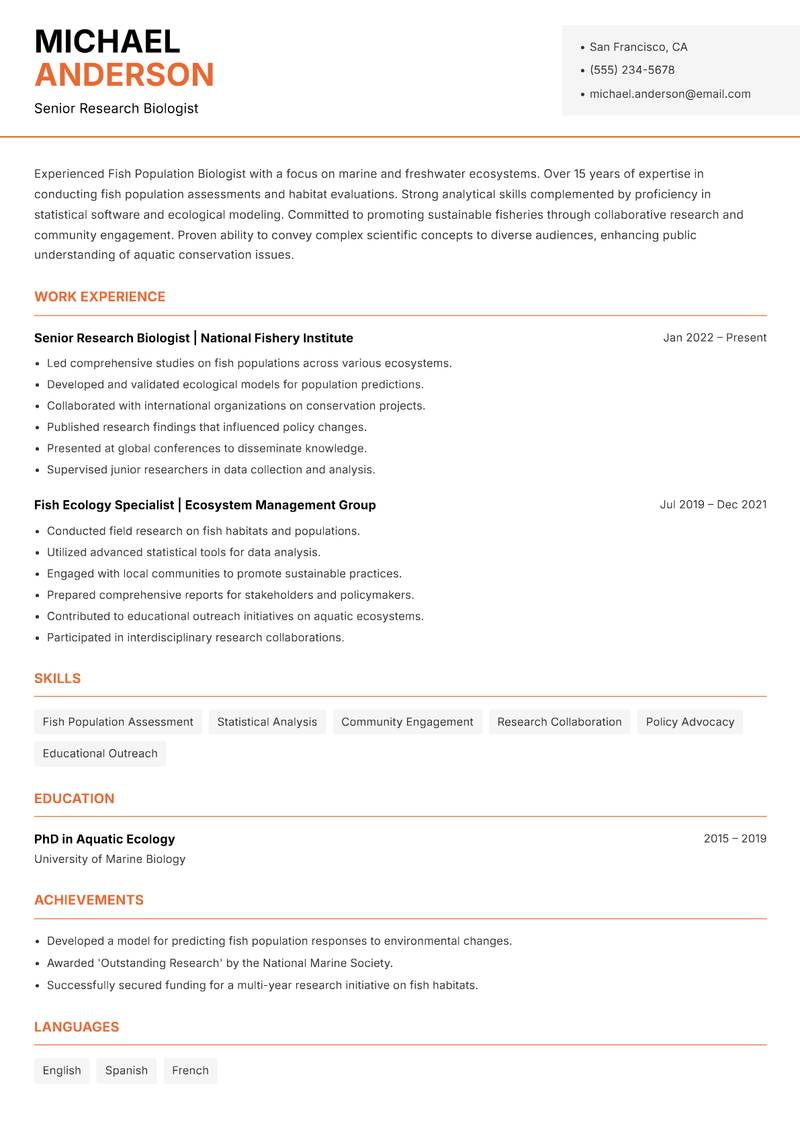
Senior Research Biologist Resume

Experienced Fish Population Biologist with a focus on marine and freshwater ecosystems. Over 15 years of expertise in conducting fish population assessments and habitat evaluations. Strong analytical skills complemented by proficiency in statistical software and ecological modeling. Committed to promoting sustainable fisheries through collaborative research and community engagement. Proven ability to convey complex scientific concepts to diverse audiences, enhancing public understanding of aquatic conservation issues. Recognized for innovative research methodologies that have led to significant advancements in fisheries management practices. Dedicated to continuous professional growth and contributing to the field through impactful research.

Fish Population Assessment Statistical Analysis Community Engagement Research Collaboration Policy Advocacy Educational Outreach
  1. Led comprehensive studies on fish populations across various ecosystems.
  2. Developed and validated ecological models for population predictions.
  3. Collaborated with international organizations on conservation projects.
  4. Published research findings that influenced policy changes.
  5. Presented at global conferences to disseminate knowledge.
  6. Supervised junior researchers in data collection and analysis.
  1. Conducted field research on fish habitats and populations.
  2. Utilized advanced statistical tools for data analysis.
  3. Engaged with local communities to promote sustainable practices.
  4. Prepared comprehensive reports for stakeholders and policymakers.
  5. Contributed to educational outreach initiatives on aquatic ecosystems.
  6. Participated in interdisciplinary research collaborations.

Achievements

  • Developed a model for predicting fish population responses to environmental changes.
  • Awarded 'Outstanding Research' by the National Marine Society.
  • Successfully secured funding for a multi-year research initiative on fish habitats.
⏱️
Experience
2-5 Years
📅
Level
Mid Level
🎓
Education
PhD in Aquatic Ecology, Univer...

Key Skills for Fish Population Biologist Positions

Successful fish population biologist professionals typically possess a combination of technical expertise, soft skills, and industry knowledge. Common skills include problem-solving abilities, attention to detail, communication skills, and proficiency in relevant tools and technologies specific to the role.

Typical Responsibilities

Fish Population Biologist roles often involve a range of responsibilities that may include project management, collaboration with cross-functional teams, meeting deadlines, maintaining quality standards, and contributing to organizational goals. Specific duties vary by company and seniority level.

Resume Tips for Fish Population Biologist Applications

ATS Optimization

Applicant Tracking Systems (ATS) scan resumes for keywords and formatting. To optimize your fish population biologist resume for ATS:

Frequently Asked Questions

How do I customize this fish population biologist resume template?

You can customize this resume template by replacing the placeholder content with your own information. Update the professional summary, work experience, education, and skills sections to match your background. Ensure all dates, company names, and achievements are accurate and relevant to your career history.

Is this fish population biologist resume template ATS-friendly?

Yes, this resume template is designed to be ATS-friendly. It uses standard section headings, clear formatting, and avoids complex graphics or tables that can confuse applicant tracking systems. The structure follows best practices for ATS compatibility, making it easier for your resume to be parsed correctly by automated systems.

What is the ideal length for a fish population biologist resume?

For most fish population biologist positions, a one to two-page resume is ideal. Entry-level candidates should aim for one page, while experienced professionals with extensive work history may use two pages. Focus on the most relevant and recent experience, and ensure every section adds value to your application.

How should I format my fish population biologist resume for best results?

Use a clean, professional format with consistent fonts and spacing. Include standard sections such as Contact Information, Professional Summary, Work Experience, Education, and Skills. Use bullet points for easy scanning, and ensure your contact information is clearly visible at the top. Save your resume as a PDF to preserve formatting across different devices and systems.

Can I use this template for different fish population biologist job applications?

Yes, you can use this template as a base for multiple applications. However, it's recommended to tailor your resume for each specific job posting. Review the job description carefully and incorporate relevant keywords, skills, and experiences that match the requirements. Customizing your resume for each application increases your chances of passing ATS filters and catching the attention of hiring managers.

Scroll to view samples